


The dream of energy independence isn't just for off-grid enthusiasts anymore. With the RI energy outage map lighting up more frequently due to coastal storms and grid instability, having a solar generator for house backup has moved from a "nice-to-have" to a household essential.
But when you start shopping, you’re immediately hit with a wall of numbers: 500W, 2,000W, 5,000W, and the confusing "Wh" (Watt-hours). If you buy a unit based on price alone, you might find out the hard way that it can't actually kickstart your fridge.
Let’s skip the jargon and look at how much power you actually need to keep your life running when the grid goes down.
1. Watts vs. Watt-Hours: The "Fuel" vs. The "Tank"
To choose the right system, you have to distinguish between these two ratings. Think of it like a car:
-
Watts (W): This is the horsepower. It determines what appliances you can run at the same time. If you plug in a 1,500W toaster and a 1,000W microwave into a 2,000W generator, the system will shut down.
-
Watt-Hours (Wh): This is the size of the gas tank. It tells you how long you can run those items.
The Strategy: You need enough Watts to handle the initial "surge" of your appliances, and enough Watt-hours to last until the sun comes out the next morning.
2. What Can You Actually Power? (The Tier System)
Most homeowners fit into one of three categories. Identifying yours will save you thousands of dollars in unnecessary equipment.
The Essentials (500W – 1,000W)
This is for the minimalist who just needs to stay connected.
-
Powers: Laptops, phones, Wi-Fi routers, and LED lamps.
-
Ideal for: Apartment dwellers or those who just want to keep an eye on the RI energy outage map and stay in touch with family.
The Standard Backup (2,000W – 3,000W)
This is the "sweet spot" for the average American home.
-
Powers: A full-sized refrigerator, coffee maker, TV, and fans.
-
Why it works: It prevents food spoilage (the biggest cost of a blackout) while keeping the house livable.
The High-Capacity Lifeline (5,000W – 7,000W+)
If you have "must-run" heavy machinery, you need to go big.
-
Powers: Well pumps, sump pumps, and perhaps a small window AC or mini-split.
-
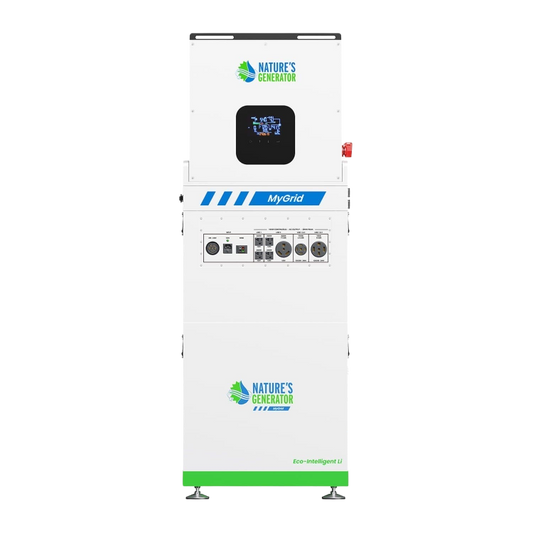
The Choice: Brands like Nature's Generator offer expandable systems that are perfect for this tier, allowing you to add more battery pods as your needs grow.
3. Don't Get Caught by "Starting Watts"
This is the most common mistake. Appliances with motors—like your fridge or a sump pump—need a massive burst of energy to start up. This "surge" is often 3x higher than the running watts.
|
Appliance |
Running Watts |
Starting (Surge) Watts |
|
Refrigerator |
200W |
1,200W |
|
Sump Pump |
800W |
2,000W |
|
Microwave |
1,000W |
1,500W |
|
Coffee Maker |
1,200W |
1,200W |
4. Calculating Your Daily Energy Budget
To find your ideal Watt-hour (Wh) capacity, do a quick "power audit."
-
Fridge: 200W x 8 hours (running time) = 1,600Wh
-
Phones/Laptops: 150Wh total = 150Wh
-
Lights & Wi-Fi: 40W x 10 hours = 400Wh
-
Total: 2,150Wh per day
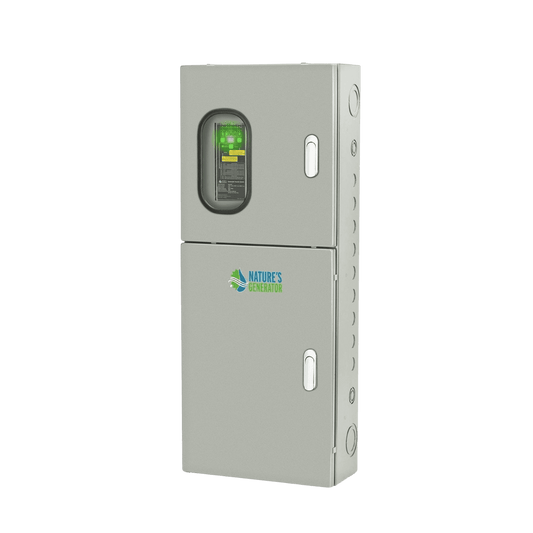
In this scenario, a 2,000Wh battery is barely enough. You’d want a 3,000Wh unit or a Nature's Generator setup with extra Power Pods to ensure you don't run dry at 3:00 AM.
5. How Much Solar Do You Need to Recharge?
A generator is just a big battery unless you can refill it. If you use 2,000Wh a day, you need enough panels to replace that energy during the limited daylight hours.
In the Northeast, you might only get 4 hours of "peak" sun. To get 2,000Wh back:
2,000Wh ÷ 4 hours = 500W of Solar Panels
Because of clouds and inefficiency, you should always "over-panel." If you need 500W, buy 700W of panels.
6. Pro Tips for Choosing the Right Model
-
Battery Chemistry Matters: Look for LiFePO4 (Lithium Iron Phosphate). They last for 10+ years, whereas older lithium-ion batteries might degrade after just 2 or 3 years of heavy use.
-
Pure Sine Wave: Ensure the inverter is "Pure Sine Wave." Cheap off-brand units use "Modified" waves that can fry your laptop’s power brick or make your fridge motor hum and overheat.
-
Expandability: If you can't afford a massive system today, buy a "base" unit from a reputable brand that allows for plug-and-play battery expansion later.
For most people, a 3,000W / 3,000Wh system is the perfect balance. It provides enough surge power to handle a refrigerator and enough storage to get through a full night without sun.
If you are dealing with a well pump or live in a high-risk area frequently shown on the RI energy outage map, look into a 5,000W+ heavy-duty setup like Nature's Generator to ensure your water and security systems stay online.


