


Power outages can disrupt everything from a work-from-home routine to a long-awaited camping trip. That’s why solar generators have become a household essential. They offer a lifeline, keeping the lights on and the fridge cold when the grid fails. However, not all power is created equal. Choosing the wrong type of generator can lead to a "silent killer" for your electronics: overheating.
If you’ve been browsing solar power generator reviews, you’ve likely seen the term "Pure Sine Wave" (PSW) popped up frequently. While these units often carry a higher price tag than "Modified Sine Wave" alternatives, the investment pays for itself by protecting your expensive appliances from heat damage.
Understanding the Waveform: Pure vs. Modified
To understand why your appliances might be at risk, we have to look at how alternating current (AC) electricity actually moves.
-
Pure Sine Wave: This is the same high-quality power you get from your utility company. It moves in a smooth, continuous, fluid curve.
-
Modified Sine Wave: This is a cheaper, "blocky" version of electricity. Instead of a smooth wave, it moves in jagged, stair-step jumps.
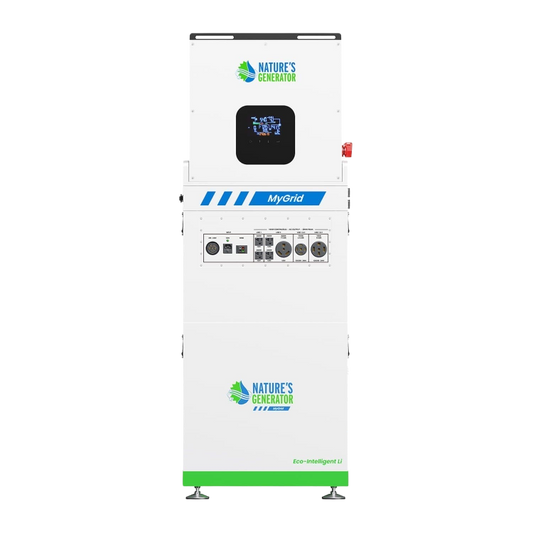
While a simple toaster might not care about the shape of the wave, your $2,000 refrigerator or your high-end gaming laptop certainly does. When you search for the best solar power generator, the gold standard is always a pure sine wave output like the MyGrid 10K. It mimics the "clean" energy your devices were engineered to use.
How "Dirty" Power Causes Overheating
The primary reason pure sine wave generators save you money is by eliminating "harmonic distortion." When an appliance with a motor or a sensitive microprocessor receives a jagged, modified sine wave, it doesn't run efficiently. Here is how that translates to heat:
1. Magnetic Losses in Motors
Appliances like fans, refrigerators, and pumps use induction motors. These motors rely on the smooth rise and fall of a sine wave to create a rotating magnetic field. When fed a blocky wave, the motor experiences "chatter" or vibrations. This resistance forces the motor to draw more current to stay at speed, which generates significant internal heat. Over time, this heat melts wire insulation and leads to a burnt-out motor.
2. Stressed Circuitry
Modern electronics—like those found in a Nature’s Generator system or high-end laptops—use complex capacitors and power supplies. A modified sine wave hits these components with sharp voltage spikes. The internal components have to work double-time to "filter" this messy energy, creating heat as a byproduct. If you’ve ever noticed a "humming" sound coming from an appliance plugged into a cheap inverter, you are actually hearing the sound of your device struggling to process the power.
3. Inefficient Power Conversion
Many devices convert AC power to DC power internally. These converters are tuned for a 60Hz smooth wave. When the wave is distorted, the conversion process loses efficiency. That lost energy doesn't just disappear; it turns into heat, which settles into the circuit boards and shortens their lifespan.
Financial Impact
You might save $200 upfront by choosing a modified sine wave unit, but the long-term costs often dwarf those initial savings.
-
Replacement Cycles: A refrigerator designed to last 15 years might fail in 7 if it’s regularly run on distorted power.
-
Energy Waste: Overheating is essentially wasted energy. Your generator has to work harder and use more fuel (or battery capacity) to compensate for the heat loss.
-
Voided Warranties: Many manufacturers of high-end medical equipment (like CPAP machines) and power tools explicitly state that using a modified sine wave inverter will void your warranty.
When reading solar power generator reviews, look for users who mention "low total harmonic distortion" (THD). Units like those from Nature’s Generator emphasize PSW technology specifically to ensure that the "Total Cost of Ownership" stays low by keeping your household tech healthy.
Which Appliances Need Pure Sine Wave Most?
If you are trying to decide if you need the best solar power generator with PSW, check if you plan to run any of the following:
|
Appliance Type |
Risk Level on Modified Waves |
Primary Symptom |
|
CPAP / Medical Units |
High |
Device failure/Overheating |
|
Laptops / PCs |
High |
Battery damage / Circuit fry |
|
Refrigerators |
Medium-High |
Loud humming / Motor burnout |
|
Microwaves |
Medium |
Uneven cooking / Transformer heat |
|
LED TVs |
Medium |
Screen interference / Lines |
At the end of the day, a generator is an insurance policy. You wouldn't buy insurance that only covers half of your house; similarly, you shouldn't buy a generator that only safely powers half of your gadgets.
By choosing top-rated PSW units, you aren't just buying a battery and a faceplate—you’re buying the internal components that "clean" the electricity. This keeps your fans running quietly, your fridge running cool, and your electronics running for years to come.
The "cheaper" generator is almost always the one that protects the gear you already own. Spend a little more on the waveform today, and you’ll avoid spending thousands on replacement appliances tomorrow.


