


Range anxiety is something most electric vehicle owners know all too well. But there is a scarier, lesser-known fear: dead battery anxiety. Picture this: your state of charge is in the single digits, the nearest charging station is twenty miles away, and a severe storm has just knocked out power to your entire neighborhood.
In an emergency, time is your most precious resource. Whether you are dealing with a grid failure, a natural disaster, or just a lapse in planning, knowing exactly how to handle your power needs is critical.
This guide breaks down the physics of emergency charging and explains why the Nature's Generator MyGrid 10K is the ultimate insurance policy for your vehicle.
The Fundamentals: Why Charging Isn’t Instant
To understand emergency charging times, we have to look at the three levels of power delivery. In a crisis, you likely will not have access to a commercial electric vehicle station, which is why relying on home-based solutions is so vital.
-
Level 1 (120V): The standard household outlet. It is slow, providing only about 3 to 5 miles of range per hour. In an emergency, this is a trickle that could take up to 50 hours for a full charge.
-
Level 2 (240V): Think of the outlet used for your clothes dryer. This is the sweet spot for home emergency setups, offering 15 to 30 miles of range per hour.
-
Level 3 (DC Fast Charging): Found at commercial hubs. These are incredibly fast but completely useless when the grid is down.
The Emergency Math
The basic formula for charging is simple: Battery Capacity (kWh) divided by Charging Power (kW) equals total hours. If you are wondering how long does it take to fully charge electric car models with a 60kWh battery using a standard wall outlet, you are looking at nearly two days. In an emergency, you need a faster, more reliable solution.
Nature's Generator MyGrid 10K
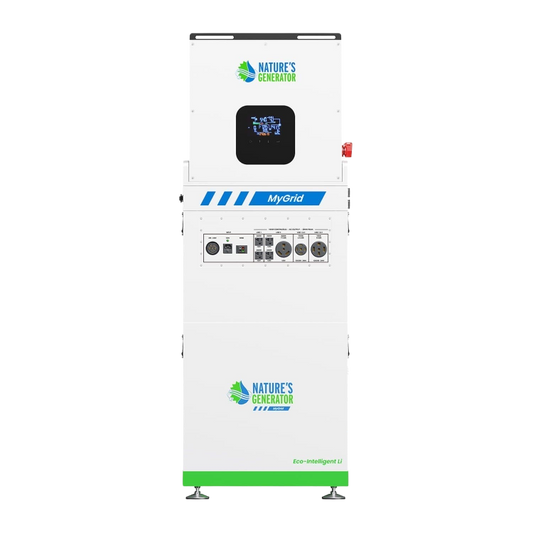
When the grid fails, you need a localized powerhouse. The MyGrid 10K is a whole-home generator system from Nature’s Generator that does more than just keep your lights on—it can keep you mobile.
With a massive 10,000W output and 10,496Wh LiFePO4 battery, this unit provides pure sine wave power. Because modern EVs are essentially computers on wheels, they require the clean, stable electricity that this system provides.
Why It Is a Game Changer
-
High Power Output: It handles the heavy draw required by EV charging cables without tripping your home’s breakers.
-
Solar Rechargeability: If gas stations are dry and the grid is dark, the MyGrid 10K can be replenished via solar panels, providing off-grid freedom.
-
Reliability: It ensures you are never tethered to a failing public infrastructure.
How to Charge EV During Power Outages
Knowing how to charge EV during power outages requires a proactive approach. You cannot simply plug into a dead wall outlet. You need a dedicated energy storage system that acts as a bridge between your home and your vehicle.
Emergency Charging Times by Vehicle Type
If you are using a robust system like the MyGrid 10K, here is how long you can expect to wait for a significant range boost:
|
Vehicle Type |
Battery Size |
Time for 10kWh Transfer |
|
Small/City EV |
40kWh – 60kWh |
2 to 3 Hours |
|
Long-Range EV |
75kWh – 100kWh |
Under 3 Hours |
Note: In an emergency, your goal should not be a 100 percent charge. Aim for enough range to reach a functional hub or to evacuate the area safely.
Factors That Slow You Down
Even with the best hardware, physics can be a challenge. Keep these three variables in mind when charging in a crisis:
-
Extreme Temperatures: Batteries perform poorly in the cold. If a winter storm caused the outage, your car may use some of the incoming power just to warm its own battery cells before it starts filling them.
-
The Top-Off Effect: Charging slows down significantly as you approach a full battery to prevent damage. Aiming for 80 percent instead of 100 percent saves hours of time.
-
Cable Efficiency: Always use the shortest, highest-gauge cable possible to minimize energy loss as heat.
Preparation is Your Best Defense
The biggest mistake EV owners make is assuming public infrastructure will always be available. By investing in a Nature's Generator MyGrid 10K, you create a private energy ecosystem that serves your home and your car simultaneously.
The Emergency Checklist
-
Maintain Your Buffer: Never let your battery drop below 20 percent if a storm is on the horizon.
-
Test Your System: Do not wait for a blackout to see if your generator can handle the load of your charger. Perform a dry run now.
-
Prioritize Mobility: When power is limited, use your stored energy for the absolute essentials—refrigeration and your vehicle’s mobility.
By taking these steps, you transform your EV from a potential liability during a disaster into a powerful tool for survival. You no longer have to worry about the unpredictable nature of the grid when you have a reliable power waiting in your garage.


