


It’s in the middle of the night, and a crack of thunder shakes the house. The ceiling fan stops working, and all the lights in your house die. Outside, the rain is horizontal.
If you own one of those standard portable generators, your night is about to get a lot worse. You’ll be heading out in a raincoat, fumbling with a pull-cord in the mud, and praying the old gasoline hasn't gummed up the carburetor.
But what if your lights just... stayed on?
As our weather gets weirder and the power grid feels more fragile, the debate between "making do" and "being prepared" has shifted. While many people still reach for portable generators as a quick fix, more homeowners are realizing that a dedicated whole home back up is the only way to protect their lifestyle.
Let’s dive into why ditching the extension cords for a permanent solution is the smartest move you can make this year.
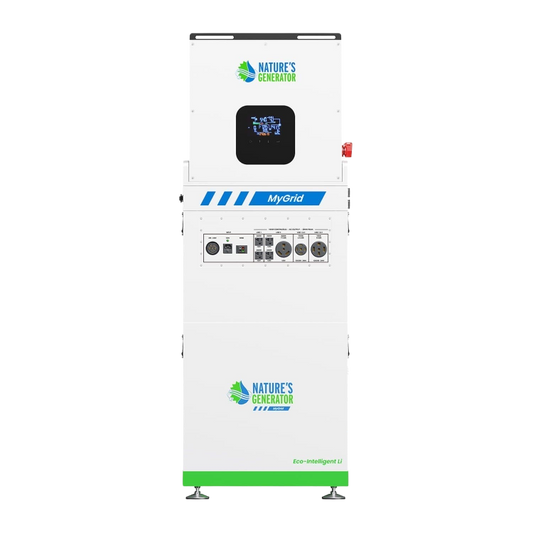
1. The "Midnight Test": Manual Labor vs. Total Automation
The biggest difference between these two systems is your own sweat equity. A portable unit is a tool you have to manage. A whole home back up is a service that manages itself.
-
The Portable Struggle: When the power dips, you have to drag the unit out of storage, keep it 20 feet from the house (to avoid deadly carbon monoxide), and manually plug in every single appliance.
-
The Whole-Home Win: These systems use an Automatic Transfer Switch (ATS). It’s like a brain for your electrical panel. It senses a power drop and kicks the backup into gear in seconds—often before you’ve even realized the neighborhood is dark.
If you’re traveling or at work when a storm hits, a portable unit is useless. A permanent backup ensures your pipes don't freeze and your basement sump pump keeps running, whether you’re home or not.
2. Powering Your "Must-Haves" (And Your "Nice-to-Haves")
When people think about portable generators, they usually think about "survival mode." You can keep the fridge cold and maybe charge a phone. But try running your central AC, your electric oven, and your home office setup all at once? You’ll trip the breaker immediately.
Power Capacity Comparison
|
Feature |
Typical Portable Unit |
Whole Home System |
|
Air Conditioning |
Window units only |
Central Air/HVAC |
|
Kitchen |
Just the Fridge |
Oven, Stove, & Dishwasher |
|
Connectivity |
Spotty/Surge Risk |
Stable, Clean Power |
|
Water |
No Well Pump support |
Full Well/Sump Support |
A whole home back up is sized specifically for your square footage. It allows you to live your life normally. You can take a hot shower, cook a meal, and hop on a Zoom call without worrying about which appliance you need to unplug first.
3. Clean Energy vs. Gas Station Gambles
We’ve all seen the lines at the gas station before a big storm. If you rely on a gas-powered portable, you are tethered to that line. Plus, storing 20 gallons of highly flammable liquid in your garage isn't exactly a "safety feature."
This is where modern innovation, like Nature's Generator, has changed the game. By moving toward solar-powered, expandable systems, you move away from the noise and the fumes.
Whole home back up solutions often utilize:
-
Natural Gas Lines: Direct hookups so you never run out of fuel.
-
Large-Scale Batteries: Like those found in the Nature's Generator ecosystem, which store solar energy for silent, clean, and infinite power cycles.
4. Protecting Your Expensive Tech
Standard portable generators are notorious for "dirty power." They produce fluctuations in electricity that can be "noisy" for sensitive microchips. If you plug a $2,000 MacBook or a 4K Smart TV directly into a cheap gas portable, you're playing Russian Roulette with your motherboards.
Whole-home systems like the Powerhouse bundle provide "utility-grade" power. They use sophisticated inverters to ensure the electricity flowing through your outlets is smooth and steady. This is non-negotiable for anyone working from home or anyone who has invested in a smart-home ecosystem.
5. Noise, Neighborhoods, and Resale Value
Portable gas generators are loud. They sound like a lawnmower running in your driveway for 48 hours straight. It’s stressful for you and annoying for your neighbors.
In contrast, a permanent whole home back up is housed in a sound-dampening enclosure. Most run quieter than a standard outdoor AC unit.
Furthermore, a permanent backup system is an investment in your property's "appraisal equity." While a portable unit goes with you when you move, a whole-home system stays, often increasing the resale value of the home and making it much more attractive to buyers in storm-prone areas.
If you only lose power once every five years for twenty minutes, a small portable might suffice. But if you live in an area with aging infrastructure, frequent storms, or high heat, the "band-aid" approach of portable generators eventually fails.
Upgrading to a whole home back up isn't just about keeping the lights on; it’s about removing the stress from the storm. It’s about knowing that no matter what happens to the grid, your family is safe, comfortable, and connected.
The Nature’s Generator Powerhouse offers expandable, clean energy solutions for real home coverage. Take advantage of our Spring Power Refresh Sale today! Promo runs from March 3-16, 2026 only.


