


Every year, homeowners watch their utility bills climb during peak hours. Discovering how to reduce your home's peak-rate electricity costs with a whole home generator is an effective strategy to regain financial control. To achieve this, investing in reliable backup power via a high-capacity solar power generator allows you to shift away from the grid when rates skyrocket. Unlike a traditional fossil-fueled machine, an eco-friendly whole home power generator or versatile portable backup power setup provides immediate savings without ongoing fuel expenses. At Nature's Generator, we design systems that protect your wallet from predatory Time-of-Use pricing structures.
This comprehensive guide will answer exactly how peak-rate electricity functions, how homeowners can leverage modern battery backup architecture to engage in peak shaving, and how a smart solar configuration provides a high return on investment. Our team will break down the precise mechanics of cutting your energy expenses, offer real-world deployment scenarios, and provide the practical details you need to choose the best setup for your property.
Why Are Your Monthly Electricity Bills Skyrocketing During Specific Hours?
To eliminate high electricity bills, you must first understand the mechanisms that utility companies use to inflate them. Across the country, power providers are moving away from flat-rate billing and aggressively transitioning to Time-of-Use (TOU) frameworks. Under a TOU framework, the price you pay for electricity fluctuates based on the time of day, the day of the week, and the season.
How Do Utility Companies Define and Structure Peak Hours?
Utility grids face extreme stress during specific blocks of time, most notably in the late afternoon and early evening when families return home, turn on air conditioning systems, cook dinner, wash clothes, and charge electric vehicles. Because the regional grid must work harder to supply electricity during these periods of high demand, utility companies raise their prices drastically to disincentivize usage and cover the cost of operating additional peaking power plants.
Based on our experience monitoring utility shifts across various states, these peak windows typically occur between 4:00 PM and 9:00 PM or 5:00 PM to 10:00 PM. During these hours, the cost per kilowatt-hour (kWh) can double, triple, or even quadruple compared to off-peak morning and late-night rates. For instance, a homeowner might pay a reasonable $0.15 per kWh at 8:00 AM, but find themselves paying upwards of $0.55 per kWh for the exact same electricity at 6:00 PM.
Which Household Appliances Consume the Most Expensive Power?
The financial damage accelerates when your most power-hungry appliances run during these premium hours. Central air conditioning compressors, electric water heaters, clothes dryers, pool pumps, and electric ovens draw immense amounts of wattage. Running a central air conditioning unit that draws 4,000 watts for four hours during a peak rate window will cost exponentially more than running that same unit during off-peak hours. If you continue to rely solely on grid power during these designated times, your monthly utility statement will remain unsustainably high.
How Does a Whole Home Generator Work to Eliminate Grid Demand During Peak Hours?
A whole home generator system equipped with an intelligent battery bank allows you to execute a financial strategy known as peak shaving or load shifting. Instead of turning off your appliances and living in an uncomfortably hot or dark house during peak hours, you simply change the source of the electricity powering your home.
The Mechanics of Peak Shaving and Load Shifting
Peak shaving involves reducing the amount of energy you draw from the utility grid during its most expensive billing tiers. When you integrate a smart solar generator into your home's electrical system, the generator acts as an energy buffer.
During the morning and early afternoon hours—when solar panels are producing peak output and grid electricity is billed at lower off-peak rates—your generator captures and stores electricity within its battery banks. When the clock strikes the beginning of the peak window, you transition your home’s primary electrical loads away from the utility grid and run them directly off the stored, zero-cost energy in your generator.
Can a Solar System Actively Run Your Home While Disconnected From the Grid?
Yes, modern high-capacity solar systems are fully capable of isolating your home’s most critical or power-hungry circuits from the utility grid. By utilizing a clean, solar-charged battery reserve to power your home during high-tariff periods, you completely avoid paying the premium rates demanded by utility monopolies. Once the peak window concludes and rates drop back down to baseline levels, your system can automatically or manually reconnect to the grid, leaving your accumulated savings completely intact.
Why Is a Solar-Powered Whole Home Generator Superior to Traditional Gas Standby Generators for Cost Savings?
When looking for a solution to combat rising electricity rates, many homeowners mistake traditional gas or propane standby generators for viable alternatives. However, running a fossil-fuel generator daily for the sole purpose of peak shaving is financially counterproductive and impractical.
Analyzing the Real Operating Costs Per Kilowatt-Hour
Gasoline, diesel, and propane are expensive fuels that carry highly volatile market pricing. If you operate a traditional internal combustion engine generator for five hours every day to avoid peak utility rates, the cost of the fuel consumed will easily surpass the savings realized on your electrical bill. Furthermore, gas generators require frequent maintenance, including oil changes, spark plug replacements, and filter updates every few dozen hours of runtime. They also produce toxic carbon monoxide emissions and intense noise, making them completely illegal or highly disruptive to operate daily in residential neighborhoods.
In contrast, an advanced solar backup generator system operates with an ongoing fuel cost of zero. It captures clean, free energy directly from the sun, converts it to usable AC power, and stores it silently without a single moving part. Based on our engineering assessments, a solar-powered system represents the only logical financial decision for daily rate mitigation.
|
Operational Feature |
Solar-Powered Whole Home Generator |
Gas/Propane Standby Generator |
|
Daily Fuel Cost |
Completely Free ($0.00) |
High (Variable fuel market rates) |
|
Maintenance Needs |
Extremely Low (No moving parts) |
High (Oil, filters, spark plugs) |
|
Noise Levels |
Completely Silent Operation |
Loud (Disturbing to neighbors) |
|
Indoor Installation |
Safe (Zero toxic emissions) |
Highly Dangerous (Emits carbon monoxide) |
|
Peak Shaving Viability |
Ideal for daily automation |
Economically unviable |
How Do You Integrate the Nature's Generator Powerhouse to Automate Peak-Rate Reduction?
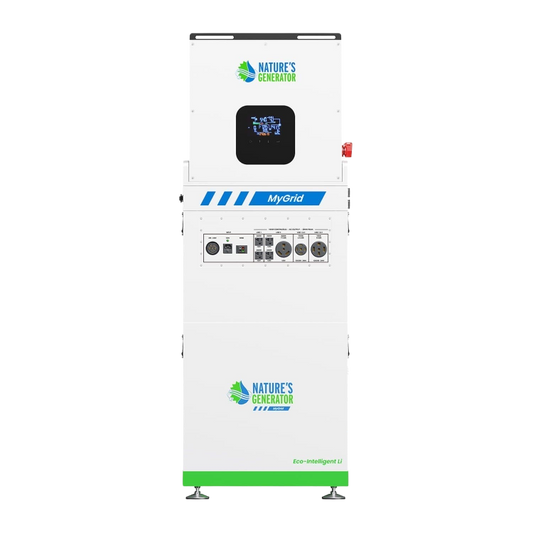
To execute a successful peak shaving strategy, you need a system capable of handling heavy household electrical loads. The Powerhouse Solar and Wind Power Generator is engineered precisely for this tier of high-demand residential application. It delivers a massive 7200W continuous output of pure sine wave power at both 120V and 240V, meaning it can easily run heavy appliances like central air conditioners, deep well pumps, and large refrigeration networks.
The Crucial Role of a Manual or Automatic Transfer Switch
To safely and seamlessly isolate your household circuits from the utility grid during peak hours, your setup must include a high-quality transfer switch for generator. A transfer switch acts as a secure electrical bridge between your main breaker panel, your home's circuits, and your generator.
Our team emphasizes that attempting to power your home without a proper transfer switch is both dangerous and inefficient. The transfer switch allows you to safely select which circuits you want to move off the grid. When the peak rate window begins, flipping the designated switches transitions those heavy-load circuits directly to your Powerhouse system. This completely isolates your home from grid power, eliminating the risk of dangerous electrical backfeeding while ensuring your appliances run smoothly on clean battery power.
Expanding Battery Capacity to Match Your Peak Window Length
To fully maximize your monthly savings, your generator’s battery capacity must be sized correctly to match or exceed the duration of your utility provider's peak pricing window. If your local peak rate lasts for five hours, your system needs to store enough total kilowatt-hours to sustain your household loads across that entire block of time.
As outlined in this blog, one of the greatest financial advantages of this platform is its modular expandability. If your initial power demands grow, or if your utility provider extends the hours of its peak rate window, you can easily add external Power Pods to your configuration. This expansion scales up your available storage capacity, ensuring your home remains completely insulated from expensive grid pricing from the first minute of the peak window to the last.
What Do Real-World Savings and Customer Experiences Look Like in Action?
To understand the financial power of load shifting, let’s analyze a practical example based on real-world usage scenarios. Consider a standard household located in a region with aggressive Time-of-Use pricing, where summer peak rates reach $0.56 per kWh between 4:00 PM and 9:00 PM, while off-peak rates sit at a modest $0.16 per kWh.
Calculated Peak Shaving Financial Breakdown
If this household draws an average of 2 kW of continuous power during that 5-hour window to run their central air conditioning, television sets, lighting, and kitchen appliances, they consume a total of 10 kWh of electricity every single afternoon.
-
Relying entirely on the grid: 10 kWh × $0.56 per kWh = $5.60 per day
-
Utilizing a solar generator system: 10 kWh × $0.00 per kWh = $0.00 per day
By shifting those 10 kWh of daily consumption to a stored solar battery bank, the homeowner saves $5.60 each day. Over a standard 30-day billing cycle, this single adjustment slashes $168.00 off the monthly electric bill. Over a typical four-month high-heat summer season, that translates directly into $672.00 in accumulated structural savings. When multiplied over several years, the equipment effectively pays for itself, transforming a standard backup asset into a high-yield home investment.
Customer Feedback on Real-World Financial Benefits
Our team frequently receives feedback from customers who initially purchased a generator system purely to protect their homes from unpredictable blackouts and severe weather events. However, after integrating the system into their daily routines via a transfer switch, they report that the most immediate, rewarding benefit is the consistent drop in their monthly utility costs.
Homeowners express a profound sense of relief and satisfaction when they realize they no longer have to live in a hot, dark house or ration their appliance use during summer afternoons just to avoid an astronomical utility bill. They have complete control over their energy consumption, enjoying optimal indoor comfort while their solar arrays quietly erase their peak-hour liabilities.
How Can You Size and Configure Your Generator System for Optimal Peak Shaving Performance?
Optimizing a whole home power generator setup for financial performance requires deliberate planning around your household's specific consumption habits.
Calculating Your Peak Window Kilowatt-Hour Demand
Our team always advises homeowners to begin by reviewing their past twelve months of electrical utility statements. Most modern utility bills provide a detailed breakdown of your precise kilowatt-hour usage distributed across off-peak, mid-peak, and peak billing periods.
Look closely at your average daily consumption during the highest-priced tier. If your billing statement indicates that you regularly consume 8 kWh of electricity during the afternoon peak window, your generator's usable battery storage capacity should comfortably exceed that value. Sizing your system with a 20% to 30% safety margin ensures that your batteries are never completely depleted, which preserves long-term battery health and provides extra overhead for unusually hot days.
Balancing Solar Input with Daily Storage Requirements
Capturing energy efficiently is just as important as storing it. To ensure your peak shaving routine remains completely free, your solar panel array must be powerful enough to fully replenish your battery reserves before the daily peak window begins.
If you plan to draw 8 kWh of power from your generator every afternoon, your solar panel array needs to generate at least that much energy during the morning and midday sunlit hours. To put this into perspective, exposing a 1,200-watt solar array to four or five hours of intense AM sunlight effortlessly delivers between 5,000 and 6,000 watt-hours of green electricity—more than enough to completely top off your battery storage. This creates a highly efficient, self-sustaining cycle: your system charges for free while the sun is high, discharges completely silent power when grid rates peak, and resets itself automatically every single day.
Conclusion
Implementing a smart energy-shifting strategy allows you to take complete control of your financial relationship with local utility providers. By transitioning your home's most demanding circuits to a whole home system during high-tariff hours, you protect your household budget from predatory pricing structures while simultaneously securing an invaluable emergency lifeline for unexpected blackouts.
The heat is up and prices are down! Shop our Summer Sale Kickoff today and secure exclusive deals through June 30.


