


A power outage can turn a normal day at home into a major inconvenience. A refrigerator can stop running, Wi-Fi can go down, lights can go out, and important equipment may lose power. Adding a transfer switch to an existing breaker panel can make it much easier to use backup power when the grid goes down.
With the right setup, homeowners can use reliable backup power, a solar power generator, a whole home power generator, or portable backup power without replacing the entire electrical system.
In this guide, we’ll explain how a transfer switch works with an existing suburban breaker panel, how to choose the right size, when to use an automatic or manual model, which circuits to back up, and what to ask an electrician before installation.
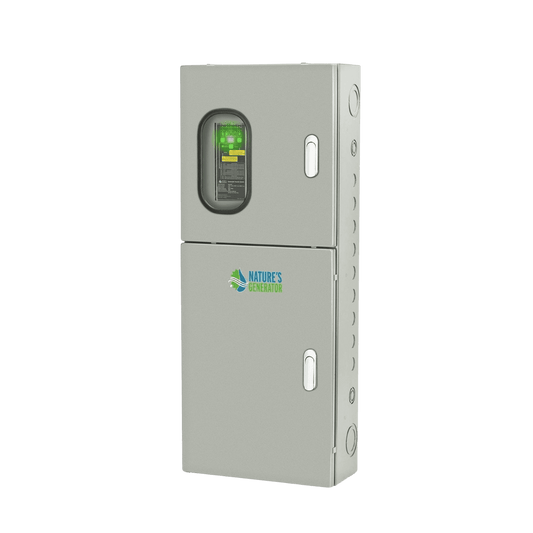
Can you add a transfer switch to an existing breaker panel?
Yes. In many homes, you can add a transfer switch to the existing breaker panel instead of replacing the entire panel.
A transfer switch connects the home's electrical system to a backup power source. When utility power is available, the home runs normally. When the grid goes down, the transfer switch moves the selected circuits to the backup power source.
The main benefit is safety. A properly installed transfer switch keeps backup power from feeding electricity back into utility lines.
Before installing one, an electrician should check the existing electrical panel, including:
-
Panel size and condition
-
Main service rating
-
Available breaker spaces
-
Breaker type and compatibility
-
120V and 240V circuits
-
The appliances you want to keep running
-
Generator output and startup power
-
Local electrical code requirements
This is important because not every breaker panel or home electrical system is the same.
A transfer switch should be chosen based on the entire backup system, not just the number printed on the transfer switch.
Which Nature’s Generator transfer switch should you choose?
The right transfer switch depends on how much of your home you want to power during an outage.
Nature’s Generator offers automatic and manual transfer switches in different sizes for different backup needs.
The 30A Automatic Transfer Switch can support up to 16 circuits, while the 50A Automatic Transfer Switch can support up to 24 circuits. The 125A Automatic Transfer Switch provides broader coverage and can support up to 48 circuits when compatible tandem breakers are used.
The important point is that circuit count does not equal power capacity.
For example, a transfer switch may be able to connect many circuits, but a backup generator may not have enough power to run every appliance on those circuits at once.
That is why load planning matters just as much as the transfer switch itself.
See Nature’s Generator transfer switches
Should you use an automatic or manual transfer switch?
The biggest difference is simple: an automatic transfer switch changes power sources for you, while a manual transfer switch requires you to do it yourself.
When does an automatic transfer switch make sense?
An automatic transfer switch is a good choice when you want the system to react to a power outage without requiring someone to operate the transfer switch.
This can be especially useful if:
-
You are away from home during an outage
-
You want backup power available as quickly as possible
-
You want a simpler experience for family members
-
You have important circuits that should stay powered automatically
For example, imagine a family is out shopping when the power goes off. An automatic system can handle the transfer without someone being home to operate a switch.
When is a manual transfer switch a better choice?
A manual transfer switch can make sense when you want more direct control.
You decide when the backup source is connected and which circuits should be used. This can work well for homeowners who are comfortable managing their power use during longer outages.
A manual system may also be attractive when the goal is to keep the installation and operating setup simple.
There is no single best choice for every home. Think about how often you lose power, whether someone is usually home during outages, and how much control you want.
Read our guide to automatic vs. manual transfer switches
How many circuits should you back up?
You should back up the circuits that matter most, not necessarily every circuit in the house.
A common mistake is trying to run too many high-power appliances at once. A better strategy is to separate your circuits into priorities.
Essential circuits
These are the circuits you are most likely to need during an outage.
Examples include:
-
Refrigerator
-
Freezer
-
Internet router and modem
-
Basic lighting
-
Security systems
-
Sump pump
-
Selected kitchen outlets
-
Important medical equipment, where appropriate
Useful but nonessential circuits
These can make an outage more comfortable but are not always necessary.
Examples include:
-
Television
-
Home office equipment
-
Garage-door opener
-
Additional lighting
-
More household outlets
High-power circuits
These appliances can use a large amount of electricity and may have high startup demands.
Examples include:
-
Central air conditioning
-
Electric dryer
-
Electric range
-
Electric water heater
-
Large well pump
-
Other heavy 240V equipment
This does not mean those appliances can never be powered during an outage. It means they need to be checked carefully against the generator's available output.
For example, a homeowner might choose to keep the refrigerator, Wi-Fi, lights, sump pump, and well pump running while leaving the electric dryer and water heater off.
That can make a smaller backup system much more useful.
Can a transfer switch power both 120V and 240V appliances?
Yes, when the transfer switch and backup power system support the home's 120V/240V electrical setup.
Most suburban homes have both types of circuits.
120V circuits usually power things such as lights, refrigerators, televisions, electronics, and standard outlets.
240V circuits are commonly used for equipment such as some well pumps, dryers, electric ranges, and larger HVAC systems.
Nature’s Generator transfer switches are designed for residential systems that use 120V and 120/240V configurations, depending on the model.
However, having a 240V transfer switch does not automatically mean you can run every 240V appliance at the same time.
Keep in mind that the backup system can only provide up to a certain amount of power.
Startup power also matters. Some motors require much more power for a few seconds when they first turn on. A well pump is a common example.
So, when planning a 240V circuit for backup, look at both:
Running power: How much electricity the appliance uses while operating.
Startup power: How much extra electricity the appliance may need when it starts.
Both numbers should be considered before adding that appliance to the backup plan.
Why retrofit an existing panel instead of replacing it?
For many homes, a retrofit is easier than rebuilding the electrical system from scratch.
A transfer switch can work with the home's existing wiring and breaker panel, allowing homeowners to add backup capability without redesigning every circuit.
This can be useful in older suburban homes where the electrical system is already working properly but needs a way to connect to a backup source.
The main challenge is compatibility.
Older panels may have limited breaker space, older wiring, or breaker types that are not suitable for the planned transfer switch. Your electrician should inspect the panel before any equipment is purchased.
The 50A Compact Automatic Transfer Switch can be particularly useful when space is limited. Its compact design is intended to work with an existing panel without requiring a separate subpanel.
See the 50A Compact Automatic Transfer Switch
What do you need to check before buying a transfer switch?
Start by looking at the electrical panel you already have at home.
Ask these questions:
1. What is the home's electrical service rating?
Find out whether the home has a 100A, 125A, 150A, 200A, or another service size.
The transfer equipment needs to match the planned installation.
2. What type of breakers does the panel use?
Breaker compatibility matters. Some installations may also involve AFCI or GFCI breakers.
Nature’s Generator provides compatibility information for its transfer switches, but your electrician should confirm what works with the exact panel in your home.
3. How many circuits really need backup?
Don’t automatically go for a bigger transfer switch just because it can handle more circuits.
Start by listing the appliances and systems that you actually need during an outage.
4. Does your backup source have enough power?
This is one of the most important questions.
A transfer switch controls where electricity goes. It does not create more electricity.
If your generator can provide 7,200W, for example, connecting 20 circuits does not give you 20 circuits worth of unlimited power.
5. Are any important appliances 240V?
Check this before choosing your transfer equipment.
A large well pump or HVAC system can change the entire backup design.
6. Where will the backup equipment be installed?
Think about cable routing, weather exposure, access, ventilation, and the distance between the generator and electrical equipment.
Planning the physical layout early can prevent expensive changes later.
What do customers ask about Nature’s Generator transfer switches?
Customer questions often reveal the issues that matter most before installation.
Questions on Nature’s Generator product pages cover practical topics such as breaker compatibility, AFCI and GFCI circuits, copper and aluminum wiring, service ratings, and system compatibility.
For example, customers have asked about whether wiring terminals can accept copper or aluminum conductors and whether the 125A transfer switch is service-rated.
These questions are useful because they show that transfer-switch selection is about more than amperage.
A homeowner may see 125A and assume the product is automatically right for a 125A service. That is not necessarily how the installation works.
The exact transfer-switch specifications and the home's electrical design both need to be reviewed.
This is also why we recommend treating customer feedback as a starting point for questions, not as a replacement for professional electrical advice.
View the Nature’s Generator 125A Automatic Transfer Switch
Can you install a transfer switch yourself?
The equipment may look straightforward, but connecting a transfer switch to a home's electrical panel is not a typical DIY project.
Nature’s Generator recommends that automatic transfer switch installation be completed by a licensed electrician.
That is especially important because the installation connects backup power to the home's electrical system and must prevent unsafe backfeeding.
A typical installation process includes:
Inspect the existing panel
The electrician checks the panel, breakers, service rating, wiring, and available space.
Choose backup circuits
The electrician identifies the circuits that should receive backup power.
Check electrical loads
Running and startup loads are reviewed to make sure the generator can handle the selected equipment.
Install the transfer equipment
The transfer switch, wiring, and generator connection are installed according to the manufacturer's instructions and applicable electrical requirements.
Test the system
Once everything is installed, test the system to make sure the selected circuits switch over safely when the power goes out.
Homeowners can make the project easier by preparing a list of the appliances and circuits they want to keep running.
Find Nature’s Generator manuals and installation resources
Is a transfer-switch retrofit worth it for a suburban home?
For many homeowners, yes.
A transfer-switch retrofit can provide a cleaner and safer way to use backup power with the electrical system already installed in the home.
It can also be more practical than trying to power individual appliances with extension cords during every outage.
The right setup depends on three things:
Your electrical panel: It must be compatible with the planned installation.
Your priority circuits: You need to decide what should stay powered during an outage.
Your backup power source: The generator or battery system must have enough continuous and startup power for those loads.
A smaller home with basic backup needs may be well served by a 30A transfer switch.
A larger home may benefit from a 50A system.
A homeowner looking for broader coverage may need a 125A transfer switch, provided the rest of the electrical and backup-power system is designed to support it.
How do you choose the right transfer switch retrofit?
Adding a transfer switch to an existing breaker panel can be a practical way to prepare a suburban home for power outages.
The best place to start is not with the transfer switch itself. Start with your home's electrical panel, identify the circuits you need most, check whether you have 120V or 240V loads, and compare those loads with the generator's continuous and startup power.
Automatic transfer switches are useful when you want backup power to switch over without manual action. Manual transfer switches are a good fit when you want more control over when backup power is used.
Most importantly, the transfer switch, breaker panel, and backup power source need to work together as one system.
For homeowners building a dependable backup setup, Nature’s Generator provides several transfer-switch options for different residential needs.
With the right planning and professional installation, a transfer switch can make your existing electrical system much more useful during an outage.


