


A reliable backup power system can be useful for more than just storm season. A solar power generator can also help with camping, DIY projects, outdoor events, remote work, and other everyday situations where you need electricity away from a wall outlet. Nature’s Generator offers portable and larger home backup systems, so you can choose a setup based on how much power you need and where you plan to use it.
But is a solar generator really worth having year-round? What can it power outside an emergency? And when should you choose portable backup power instead of a whole home power generator? This guide answers those questions with simple examples to help you choose the right type of backup power for your home and lifestyle.
What can you use a solar power generator for all year?
A solar power generator can be used for everyday activities, not just power outages. Its main advantage is flexibility: the same system can provide emergency power during a storm and portable electricity for regular activities throughout the year.
Here are some common uses:
This makes a solar generator more than an emergency-only purchase. You can use it when the grid is working, during an outage, or whenever you need power somewhere without a convenient outlet.
Can a solar generator keep your essentials running during a storm?
Yes. A solar generator can provide backup electricity during a storm, but the amount of equipment it can run depends on its output and battery capacity.
The first step is to decide what you actually need during an outage. Most homes do not need to power every appliance at the same time.
For example, your priority list may include:
-
Refrigerator
-
Wi-Fi router
-
LED lights
-
Phones and tablets
-
Laptop
-
Medical or other essential electronics
-
Sump pump or well pump, depending on system capacity
A smaller power station can make sense when you mainly want to keep essential devices running. Nature’s Generator Lithium 1800, for example, provides 1,800W of continuous output and a 1,440Wh LiFePO4 battery. It is designed for home backup, outdoor use, RVs, travel, and other portable applications.
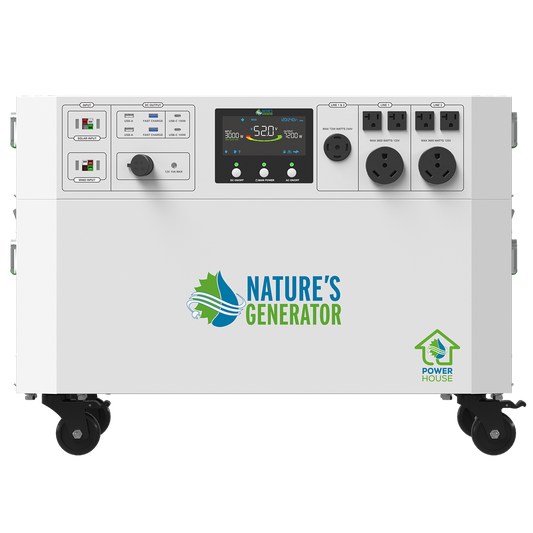
For heavier household loads, a larger system may be a better match. The Powerhouse Gen 2 provides 7,200W of 120V/240V split-phase output and has a 4,800Wh base battery. It can also connect to home circuits through a compatible transfer switch or power inlet box.
The key is to size the system around your real needs instead of assuming you need to run the entire house during every outage.
What can you power with a solar generator during a weekend project?
A solar generator can be especially handy when you are working somewhere without easy access to electricity.
Think about common projects such as building a shed, repairing a fence, setting up a backyard workshop, or working on a renovation. Running a long extension cord may not always be convenient, especially outdoors.
A portable power station can give you a nearby source of electricity for compatible equipment. Depending on the tool and its power requirements, that could include drills, work lights, chargers, small saws, and other electronics.
There is one important thing to check before using a tool: starting wattage.
Some tools with motors need more power when they first turn on than they use while running. Your generator needs enough output to handle that temporary surge as well as the normal running load.
For example, a power station may have enough capacity for a tool's normal wattage but still struggle to start it if the startup demand is too high.
Battery capacity also matters. If you plan to work for several hours, more stored energy means you can spend less time stopping to recharge.
Nature’s Generator L3600 offers 3,600W of continuous output and 3,072Wh of LiFePO4 battery capacity. The system can also be expanded with Power Pods as your energy needs grow.
Is a portable solar generator useful for camping and outdoor trips?
Yes. For camping, tailgating, RV trips, and outdoor activities, portability can be more important than maximum power.
A smaller system is easier to move and set up. You can bring it along when you need electricity away from the house without building a permanent power setup.
A simple weekend camping routine could look like this:
During the day: Use solar panels to recharge the battery.
In the evening: Use stored energy for lights, phones, laptops, fans, or other compatible devices.
The next day: Put the panels back in the sun and recharge while you continue using the system.
Nature’s Generator Lithium 1800 is designed for portable use and can charge through solar, wind, or an AC wall outlet. It provides 1,800W of continuous output and 1,440Wh of battery storage.
For users who need more power but still want a system that can be moved, the L3600 provides 3,600W of continuous output and 3,072Wh of battery storage.
The right choice depends on how much equipment you bring and how long you want the system to run before recharging.
When should you choose a whole-home system instead of portable backup power?
Choose a larger home-integrated system when you need to support more circuits or higher-power appliances.
Portable backup power is usually most convenient when you want to plug individual devices directly into the generator. It works well for camping, small projects, and keeping a few essentials running during an outage.
A home-integrated setup is different. A compatible transfer switch or inlet box can connect the generator to selected household circuits, so you do not need to move the unit from one appliance to another.
The Powerhouse Gen 2 is designed for this type of use. It delivers 7,200W of 120V/240V split-phase power and can connect to home circuits through a transfer switch or power inlet box. Nature’s Generator says it can support loads ranging from small electronics to larger appliances such as refrigerators, well pumps, air conditioners, and water heaters, provided the total load stays within the system's limits.
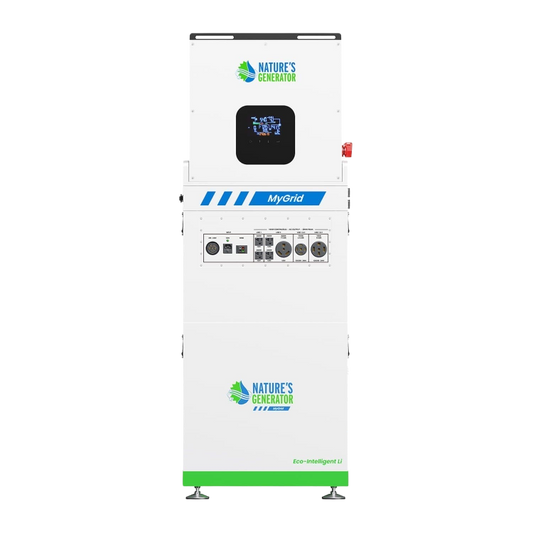
For even larger power needs, the MyGrid 10K Gen 2 provides 10,000W of continuous output and 10,496Wh of LiFePO4 battery storage. It supports 120V/240V split-phase output and can expand its battery capacity as needs increase.
That makes the decision fairly simple:
Choose portable power when mobility and individual devices are your priority.
Choose home integration when you want backup power connected to household circuits.
Choose a larger system when you need higher output, longer runtime, or support for bigger appliances.
Can you recharge a solar generator even when there is no outage?
Yes. One of the biggest advantages of a solar generator is that you can recharge it before an emergency and continue charging it from solar during an extended outage.
This gives you more flexibility than a system that can only be refueled or recharged in one way.
Depending on the model, Nature’s Generator systems can support different charging options. The Lithium 1800 supports solar, wind, and AC charging. The Powerhouse supports solar, wind, and AC charging, while the MyGrid 10K also supports multiple charging methods, including solar, wind, and AC input.
Solar charging can help extend runtime, but solar output is not constant. Weather, shade, panel direction, daylight hours, and other conditions can affect how much energy your panels produce.
For that reason, it is better to view solar as part of your backup plan rather than assuming your panels will always operate at their maximum rated output.
How do you choose the right solar generator for year-round use?
Start with your most common use case, then look at output, battery capacity, portability, and expansion.
Then make a list of the appliances or tools you expect to use. Check their running wattage and startup wattage. This gives you a much better idea of what size system you need.
It is also worth thinking about the future.
Your power needs may change if you add a home office, workshop, electric appliances, or more backup circuits. An expandable system can give you room to increase battery capacity later instead of starting over.
You can compare Nature’s Generator backup power systems based on portability, output, battery storage, and expansion options.
For larger household backup, the Powerhouse Gen 2 and MyGrid 10K Gen 2 are designed for higher power requirements and home integration.
Is a solar generator worth buying if you only have a few outages each year?
It can be, especially when you use it for other things throughout the year.
A generator that only comes out during an emergency may spend most of its life sitting in storage. A solar generator can serve a different role because you can use it for camping, outdoor projects, backup during storms, remote work, and other situations where you need electricity away from a standard outlet.
For example, a homeowner might use a portable system for weekend projects, take it camping a few months later, and then use it to keep the refrigerator and Wi-Fi running during a storm.
That flexibility can make a solar generator more useful year-round.
What is the best way to use a solar generator throughout the year?
The simplest strategy is to match the system to the jobs you actually have.
Use a smaller portable unit when you mainly need mobility and basic power. Move up to a larger system when you need more output or longer runtime. Add solar panels and battery expansion when you want more ways to recharge or more stored energy.
You also do not need to wait for an emergency to learn how your system works. Using it during normal activities gives you a chance to understand its runtime, charging needs, and the equipment you can safely run before the next outage happens.
The best backup setup is one that fits naturally into your life. With the right system, Nature’s Generator can provide power for everyday activities while also giving your home an added layer of backup when the grid goes down.


