


Power outages can be harder to manage when you live in a condo, apartment, townhouse, or HOA-controlled community. You may not have a private yard for a traditional generator, your building may restrict fuel storage, or you may share walls with nearby residents.
That is where reliable backup power, a solar power generator, a whole home power generator, and portable backup power can offer practical alternatives.
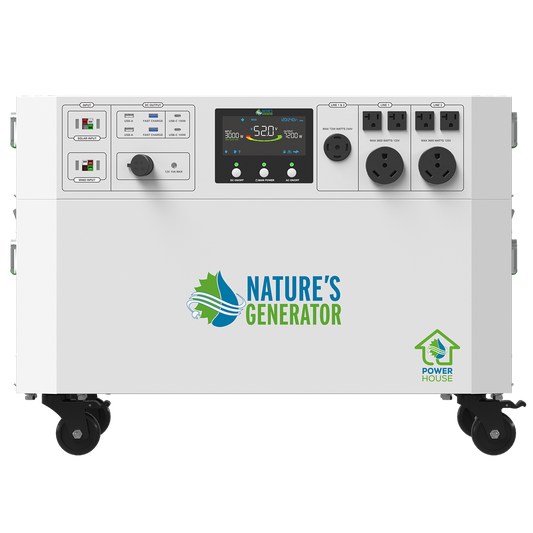
In this guide, we explain how to choose backup power for shared-wall housing, including whether traditional generators make sense, how much power you may need, how solar charging works, and when a system like Nature’s Generator Powerhouse Gen 2 could fit your home. We will also cover real-world outage scenarios, electrical connections, and what to check before buying.
Can you use a gas generator in a condo or HOA community?
A traditional gas generator may not be practical in many condos, apartments, and HOA properties because it burns fuel and produces exhaust.
Gas generators need to run in an appropriate, well-ventilated location. That can be difficult if you do not have a private yard. Balconies, garages, parking areas, and shared spaces may also have restrictions.
Your HOA, landlord, or property manager may have rules covering:
-
Generator placement
-
Noise
-
Fuel storage
-
Exterior equipment
-
Electrical modifications
-
Balconies and common areas
Always check the rules for your property before purchasing a backup system.
A battery-based solar generator works differently. It stores electricity and delivers it through an inverter instead of burning fuel while operating. Nature’s Generator’s Powerhouse Gen 2 is designed for indoor use, while its solar panels and wind turbine are intended for outdoor use.
That can make battery backup a practical option for urban homes where space, exhaust, and noise are concerns.
What is the difference between portable backup power and whole-home backup?
The main difference is how much power you need and how you want to use the system.
Portable backup power is typically used for selected devices. You might plug in a refrigerator, Wi-Fi router, lights, phones, or a laptop.
A whole home power generator is designed to support more circuits and larger appliances. When connected through a suitable transfer switch, it can provide backup power to selected circuits instead of requiring every appliance to be plugged directly into the unit.
Whole-home backup does not necessarily mean running everything at once.
A simple priority system can help:
For most homeowners, the better question is not, Can I power everything? It is, Which appliances do I need most during an outage?
How much backup power does a condo really need?
Start by listing the appliances you want to use during an outage.
Check their wattage and, when applicable, their starting or surge requirements. Refrigerators, pumps, and other motor-driven appliances can briefly require more power when they start.
For example:
-
Refrigerator: 150W average while running
-
Router and modem: 25W
-
LED lights: 40W
-
Laptop: 60W
That equals about 275W of simultaneous demand based on those assumptions.
When comparing backup systems, pay attention to two numbers:
Watts (W): how much power the system can provide at one time.
Watt-hours (Wh): how much energy the battery stores.
You need enough output to start your appliances and enough battery capacity to keep them running.
Nature’s Generator Powerhouse Gen 2 provides 7,200W of 120V/240V split-phase output and 4,800Wh of battery capacity. See Powerhouse Gen 2 specifications
Actual runtime depends on what you connect, how much electricity those devices use, and how long they run.
Can a solar generator keep your condo running overnight?
Yes. The solar panels charge the battery during daylight, and the stored energy can then be used after the sun goes down.
Think of solar as a way to replenish your backup battery rather than a direct replacement for the battery itself.
Your runtime depends on:
-
How much power your appliances use
-
How many devices run at once
-
How long they operate
-
Battery capacity
-
Solar conditions
-
System efficiency
Nature’s Generator says the Powerhouse Gen 2 supports up to 2,000W of solar input and can also be charged through AC and wind input.
That gives homeowners more than one way to recharge during longer outages.
For condo residents, solar panel placement is important. A balcony, patio, or rooftop may look like the obvious option, but your building may require approval before panels or other equipment are installed.
Can you use a solar generator indoors?
Some battery systems are designed for indoor use, but you should always follow the manufacturer's instructions.
The Powerhouse Gen 2 is designed for indoor use, while its solar panels and wind turbine are intended for outdoor placement.
This can be useful in apartments and condos because you do not have to operate a combustion engine next to your living space.
However, indoor use does not mean the unit can be placed anywhere. Follow the required operating conditions, clearances, and local electrical requirements.
Your building's rules still apply as well.
Can a backup battery power your refrigerator, Wi-Fi, and other essentials?
Yes. These are usually the first loads homeowners choose to protect.
A refrigerator helps prevent food from spoiling. Internet equipment can also be important for people working from home, attending school, managing a business, or staying connected during an emergency.
A practical outage plan might look like this:
First: refrigerator, internet equipment, lights, phones, and critical devices.
Second: fans, laptops, television, and small appliances.
Third: high-power appliances such as dryers, electric ranges, large air conditioners, water heaters, and EV chargers.
Turning off nonessential devices can help extend battery runtime.
This approach also makes backup power easier to manage because you are focusing on the equipment you actually need.
How do you connect backup power to a condo's electrical panel?
There are two common approaches.
The first is plugging appliances directly into the backup unit. This is the simplest option when you only need a few devices.
The second is connecting the system to selected home circuits through a transfer switch.
Nature’s Generator offers a 120/240V 30A 12-circuit manual transfer switch for the Powerhouse system. Powerhouse with Transfer Switch
For condos and apartments, electrical work requires extra care.
Do not assume you can modify your electrical panel simply because the system supports it. Your building may require approval, and electrical installation may need to be completed by a qualified professional.
Before installation, find out:
Can your electrical panel be modified?
Does your HOA or property manager need to approve the work?
Which circuits do you actually need during an outage?
These questions should be answered before you buy.
What does a real condo outage setup look like?
Imagine a summer outage starts at 6 p.m.
Your refrigerator is full, your phones need charging, you are working from a laptop, and you need Wi-Fi and several lights. You also want to run a fan.
You do not need to power every appliance.
Instead, you can prioritize the refrigerator, Wi-Fi, lights, charging devices, and fan while switching off nonessential loads.
If the outage continues into the next day, solar charging can help replenish the battery during daylight hours.
This is often a more practical strategy than trying to maintain normal electricity use during an outage.
The same thinking applies to winter outages. Focus first on food storage, communication, lighting, and other essential equipment before comfort or high-power loads.
Should you choose the Powerhouse Gen 2 or a larger system?
Your choice should come down to your power requirements.
The Powerhouse Gen 2 provides 7,200W of 120V/240V split-phase output and 4,800Wh of battery storage. It can also be expanded with additional Power Pods and renewable charging options.
The MyGrid 10K Gen 2 is designed for higher-demand applications. It provides 10,000W of continuous output, 20,000W of peak output, and 10,496Wh of LiFePO4 battery storage. MyGrid 10K Gen 2
A bigger system is not automatically the right choice. Start with your actual loads, expected runtime, available space, and building requirements.
What should you check before buying backup power for an HOA or condo?
Start with your building's rules.
Check whether your property allows battery systems, solar panels, balcony equipment, electrical modifications, transfer switches, or dedicated power connections.
Then calculate your electrical needs.
List your essential appliances, check their wattage, and pay attention to devices with high starting loads.
Finally, consider outage duration.
A short outage may only require enough energy for a refrigerator, lights, internet equipment, and phones. A longer outage will require more battery capacity and a dependable way to recharge.
An expandable system can be useful here because you can add storage as your needs grow instead of replacing the entire system.
What is the best backup power strategy for shared-wall housing?
For many condo, apartment, townhouse, and HOA homeowners, the most practical strategy is to focus on essential loads, battery storage, and safe charging instead of trying to run every appliance normally.
A portable system can work well for phones, lights, internet equipment, laptops, and smaller appliances.
A larger whole-home system may make more sense when you need more circuits, higher output, 240V capability, or longer runtime.
The goal isn’t to choose the largest system available.. It is to choose one that fits your home, your power needs, your expected outage length, and your building's rules.
How can you prepare for outages without fuel and fumes?
Backup power can look very different in a condo or HOA community than it does in a detached house.
Limited outdoor space, shared walls, building rules, and electrical restrictions can make traditional fuel-powered generators difficult to manage. Battery-based backup provides another option: store electricity ahead of time, use it during an outage, and recharge through solar, AC, or other supported methods.
Before buying, focus on four questions:
What do I need to power?
How much electricity do those devices use?
How long do I need them to run?
What does my building allow?
Nature’s Generator offers solutions ranging from portable backup power to expandable whole-home systems.
For shared-wall housing, the right backup system is the one that gives you dependable power while fitting your space, electrical needs, and the rules of your home.


