


When bad storms hit, getting reliable backup power is a must for every family. At Nature’s Generator, our team has seen public power grids fail for days at a time, leaving entire neighborhoods completely in the dark. Having a dependable whole home power generator strategy is the only way to keep your household safe and comfortable. Whether you need a large system or a small portable backup power unit, you have to choose between solar, wind, and gas. In this guide, we will look at the best multi-day blackout backup strategy for suburbs to see if a clean solar power generator beats old-school gas.
Based on our experience, keeping your lights on during a long power outage requires understanding how different energy sources work in a typical neighborhood. Blackouts are no longer short annoyances that end in an hour. Today, big storms and aging equipment mean families often go without power for two to seven days. When you are stuck in a long outage, the backup system you choose decides how well you can protect your food, your comfort, and your safety. Let's look at how gas, solar, and wind stack up when the grid goes down.
Why Do Traditional Suburban Gas Generators Fail During an Extended Grid Collapse?
For a long time, noisy gas engines were the most common way to handle a power outage. However, when a blackout lasts for more than a day, gas generators create some very big problems for suburban homes.
The first major issue is fuel. A standard gas generator uses about 15 to 20 gallons of fuel every single day. If your power is out for four days, you need to store and handle up to 80 gallons of gasoline. Storing that much gas is highly dangerous, and it usually breaks local fire codes and Homeowners Association (HOA) rules.
Even worse, gas stations run on the exact same power grid as your home. If your neighborhood loses power, the local gas stations cannot pump gas either. This causes immediate fuel shortages, long lines, and empty tanks within hours of a storm. Our team often hears from homeowners who are left with useless, empty generators on day two of a blackout simply because they cannot buy more gas anywhere nearby.
Real-World Scenario: The Fuel Supply Trap
During a severe winter freeze, a suburban neighborhood lost power for five days straight. One resident relied entirely on a portable gas generator and used up their 15-gallon fuel supply by the second afternoon. Because the roads were covered in ice and nearby gas stations were closed due to the power outage, they could not buy more fuel. The family had to spend the next three days in a freezing house with spoiled food, proving how risky it is to rely on outside fuel lines during a disaster.
Aside from fuel problems, gas generators require a lot of hands-on maintenance. They have complex engines that need regular oil changes, new spark plugs, and clean fuel lines. If gas sits inside the machine for a few months without being used, it turns into a sticky goo that clogs the engine, making it break down right when you need it most.
Gas generators are also incredibly loud, usually producing a roar between 65 and 75 decibels. In crowded suburbs, this constant noise will keep you and your neighbors awake and can violate local noise rules. Most importantly, gas engines breathe out toxic carbon monoxide fumes. You must keep them far away from windows, doors, and garages, which is very hard to do safely on a small suburban lot.
How Does a Solar Power Generator Handle a Multi-Day Suburban Outage?
Modern solar backup technology works in a completely different, self-sufficient way. Instead of forcing you to go out and look for fuel, a solar system turns your house into its own independent power station. It uses solar panels to catch daylight and turn it into electricity. A smart control box then sends that power straight into large battery banks. The system automatically runs your important appliances during the day while saving the extra power to keep your home running all night.
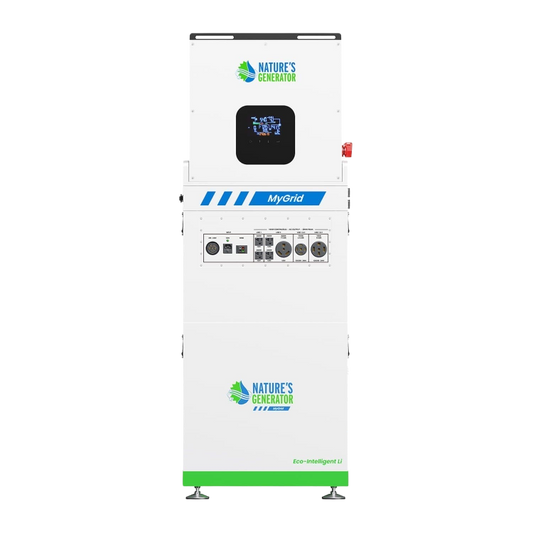
One of the best features of an advanced system, like the Nature's Generator Solar Ecosystem, is that you can expand it easily over time. Unlike gas generators, you are not stuck with whatever size you bought first. If your power needs grow—like if you buy an extra freezer or need to run medical equipment—you can easily plug in extra solar panels and extra batteries. This allows your system to grow with your family's needs.
Customer Feedback: Silent and Clean Power
"We lost power for four days after a huge summer storm. Our solar backup system kept our large refrigerator, home security, internet, and medical devices running without stopping for a single second. While our neighbors' gas generators were screaming and making the air smell like exhaust, our house was completely quiet and comfortable, powered entirely by the sun."
Using a solar generator also gets rid of the dangers that come with gas engines. Solar power is 100% silent and produces zero fumes. This means you can safely keep the batteries and control boxes inside your home, like in a basement or a closet. Keeping the equipment indoors stops thieves from stealing it during a dark blackout and protects the electronics from rain and freezing cold. Your only job is to look at a simple digital screen to see how much power you are using and make sure your outside panels stay clear of leaves or heavy shadows.
Can Wind Turbines Provide Reliable Backup Power in Suburban Neighborhoods?
Using wind to generate emergency power sounds like a great idea, but it is very difficult to do well in a typical suburban yard. Wind turbines need smooth, fast-moving air to spin their blades and make electricity. On wide-open farms or coastal properties, wind systems work beautifully and can generate power day and night.
In the suburbs, however, houses, tall fences, and mature trees act like giant windbreaks. They disrupt the wind, turning smooth air into weak, swirling pockets of breeze. Most small wind turbines need steady wind speeds of at least 8 mph just to start turning, and they do not make a lot of power until winds hit over 25 mph. Because neighborhood obstacles block the breeze, a wind turbine mounted on a suburban roof usually makes very little electricity.
Local zoning laws and strict HOA rules are another giant hurdle. Many neighborhoods explicitly ban tall towers and spinning blades because of how they look, the humming noise they make, or safety concerns. Because of this, you should not rely on wind power alone for your suburban backup plan. Instead, our team looks at small wind turbines as a helpful secondary tool to use alongside solar panels, helping to catch extra energy during dark, windy winter storms when the sun isn't shining.
Which System Offers the Best Cost-to-Performance Ratio for Whole-Home Power Demands?
To choose the right system for your home, you need to compare how each option handles a real emergency. Below is a simple chart built by our team to show how gas, solar, and wind perform during a long suburban blackout.
Emergency Power Comparison
|
Feature |
Gas Generators |
Solar Power Generators |
Micro-Wind Turbines |
|
Fuel Availability |
High Risk: Gas stations close down when the grid fails. |
Perfect: Automatically recharges for free every day using sunlight. |
Unpredictable: Totally dependent on the daily weather. |
|
Noise Level |
Very Loud (65–75 dB): Can upset neighbors and break noise rules. |
Silent (0 dB): Completely quiet and safe to use inside. |
Quiet to Medium Hum: Often restricted by neighborhood rules. |
|
Maintenance |
High: Needs regular oil changes and fresh fuel. |
Almost Zero: Solid-state parts with nothing to fix or lubricate. |
Medium: Requires checking the spinning parts and bearings. |
|
Adding More Power |
Impossible: You have to buy a whole new machine to get more power. |
Excellent: You can plug in more batteries and panels anytime. |
Limited: Restricted by your yard size and pole height. |
|
Indoor Safety |
Deadly: Dangerous fumes mean it can never be used indoors. |
Perfectly Safe: No fumes, no chemicals, and no fire risks. |
Perfectly Safe: Power comes inside through a safe wire. |
When thinking about the cost of these systems, you have to look past the store price and think about the long-term costs. A portable gas generator is cheaper to buy at first, but the ongoing costs of gas, engine oil, fixes, and replacement parts add up very fast.
On the other hand, a high-quality solar setup costs more upfront, but it uses free sunlight, requires almost no maintenance, and lasts for decades. When you look at long-term costs and absolute reliability, solar systems give suburban homeowners the best value for their money.
What Is the Ultimate Hybrid Backup Strategy for Suburbs Facing Extended Blackouts?
Based on our field experience, relying on just one type of energy can leave you vulnerable if the weather changes. The smartest and most reliable suburban backup plan uses a hybrid strategy. By combining different ways of making power into one battery system, you can balance out the weaknesses of one tool with the strengths of another.
The ultimate setup for surviving a long blackout pairs a primary solar panel array with a small, helpful wind turbine, all plugged into an expandable battery system like the Nature's Generator Elite. This smart setup ensures your batteries are always charging, no matter what the weather is doing outside.
During bright, calm summer days, your solar panels do the heavy lifting to charge your batteries and run your appliances. If a giant storm rolls in—bringing dark clouds that block the sun but whipping up high winds—the system automatically starts pulling power from the wind turbine instead. This double-defense approach keeps your batteries charging 24 hours a day, completely independent of the public power grid.
Step-by-Step Guide to Setting Up Your Home System
-
Find Your Power Number: Make a list of your must-run appliances (like your refrigerator, Wi-Fi router, lights, and phones) and add up their wattages. Do not waste your backup power on non-essential, high-energy luxury items during an emergency.
-
Set Up a Solid Battery Base: Buy a high-capacity, expandable power station that can take power from both solar panels and wind turbines at the same time.
-
Place Your Panels Wisely: Put your solar panels on a part of your roof or yard that faces south and gets full, unshaded sunlight. If you use a small wind turbine, use a sturdy pole to get it above nearby fences and bushes.
-
Practice Power Drills: Twice a year, test your system. Turn off your home's main breaker and run your family on your backup power for 12 hours. This helps everyone practice using and saving energy before a real storm hits.
Choosing Your Suburban Energy Security Path
Protecting your family from a long-lasting power outage means moving away from fragile, fuel-dependent machines and choosing modern self-sufficiency. While traditional gas generators create too many fuel and noise problems in a neighborhood, and wind power is limited by surrounding houses, a solar battery system gives you the safety, silence, and reliability that suburban life demands. For families who want true peace of mind, an expandable system from Nature’s Generator is a proven, worry-free solution. Your home stays safe, warm, and fully powered through any multi-day blackout.


