


If you live in a neighborhood with a Homeowners Association (HOA), keeping your lights on during a storm isn't as simple as pulling an old gas generator out of the shed. More and more communities across the country are clamping down on noisy gas engines and unsafe fuel storage. If you want reliable backup power that won't bring an HOA violation notice to your front door, you need a smarter approach.
At Nature's Generator, we help homeowners navigate these strict community rules every day. The best way to keep your home running safely and quietly is with a hybrid solar power generator backed up by wind power. Whether you just need portable backup power to run your essential devices or a complete whole home power generator setup for your entire house, clean battery power lets you stay powered up without breaking any neighborhood rules.
In this guide, we will break down why traditional gas generators are getting banned, how HOAs enforce noise rules, and how a solar and wind battery setup gives you total peace of mind—100% fine-free.
Why Are HOAs Banning Gas Generators and Setting Strict Noise Rules?
When the power grid goes down, your first thought might be to go out and buy a standard gas or propane generator. But in an HOA community, running one can quickly get you into trouble with your board and your neighbors. HOA rules exist to protect safety, property values, and quiet neighborhoods—and noisy, smelly gas generators clash with all three.
Fire Risks, Smelly Fumes, and Gas Storage Rules
Safety is the biggest reason HOAs and local fire departments restrict gas generators. Combustion engines produce carbon monoxide, a dangerous odorless gas. To run one safely, you have to place it far away from doors, windows, and vents. In tight neighborhoods, townhomes, or houses with small yards, achieving that safe distance is almost impossible.
On top of that, storing 10 to 20 gallons of gasoline in your garage or shed is a major fire hazard. Gas goes bad after a few months, spills easily, smells terrible, and creates hazardous fumes. Many HOA bylaws strictly ban storing large amounts of fuel on your property for this exact reason.
Noise Limits: Why Loud Generators Don't Pass the Neighborhood Test
Noise is usually what triggers the first complaint from a neighbor. Most standard gas generators run at 68 to 78 decibels (dB). To put that in perspective, a normal conversation is about 60 dB, while 75 dB sounds as loud as a vacuum cleaner running right next to your ear all day and night.
Most suburban HOAs enforce strict quiet hours and set noise limits around 50 to 55 dB at your property line. Standard gas generators easily blow past these limits. Running one during a nighttime outage is a fast track to noise complaints, warning letters, and daily fines from your board.
How Does a Solar-Wind Hybrid System Fix the HOA Problem?
To stay fully compliant with your HOA while keeping your power on, you need a system that removes noise and fire risks entirely. Battery systems charged by sun and wind solve both problems at once.
Zero Engine Noise, Zero Fumes, Zero Fines
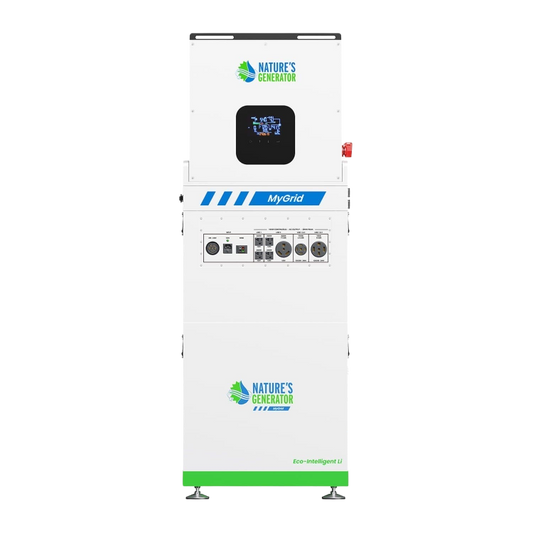
Unlike gas engines with noisy moving parts and exhaust pipes, battery power systems run completely silent. A setup like our Powerhouse Gen 2 operates at 0 decibels of engine noise. You can set it up inside your garage, basement, or utility room without hearing a peep. Since there are no exhaust fumes or flammable gas cans involved, it is completely safe for indoor use and 100% compliant with community safety rules.
Solar Plus Wind: Why Having Both Means Power Day and Night
People often ask us: What happens if the power goes out during a rainstorm or at night when there's no sun?
That is where adding wind power makes all the difference. By connecting a small, low-profile wind turbine alongside your solar panels, your home can collect free energy around the clock. Wind often picks up during stormy weather and cold fronts—right when solar power takes a back seat. This tag-team approach keeps your batteries topped off day and night without ever needing a noisy backup engine.
Can a Solar-Wind System Really Power Your Whole House?
A common myth is that solar battery generators are only good for charging smartphones or plugging in a lamp. Today's modern battery systems are built to handle real household electricity demands.
Real Power for Big Appliances: AC, Fridges, and Well Pumps
Smaller household items run on standard 120V power, but heavy-duty appliances—like your central air conditioner, refrigerator, water heater, or well pump—need 240V power. High-capacity battery systems can deliver both 120V and 240V output, giving you the extra surge power needed to start up heavy appliance motors.
When you link your system directly to your breaker box using an approved transfer switch, your key home appliances kick on automatically during a blackout. You can keep food fresh, stay cool, and keep the lights on without a single hiccup.
Example Story: Surviving a 5-Day Outage in Florida
"When Hurricane Ian hit, our neighborhood lost power for five full days. Our HOA has very strict rules against gas generators because the houses here are built close together. Thanks to our Nature's Generator system with solar panels and a rooftop wind turbine, our fridge stayed cold and our central air kept working the whole time. While our neighbors worried about spoiled food and heat, our setup ran quietly without causing a single issue with the HOA board."
Start Small or Go Big: Building a System That Fits Your Budget
Every home has different energy needs. One of the best things about modern battery setups is that they are modular. You can start with a compact unit like the Nature's Generator Elite to keep your essential items running, then easily add more battery pods, extra solar panels, or a wind turbine down the road as your needs grow.
How Do You Get Your HOA Board to Say Yes to Solar and Wind?
While your battery unit sits safely inside out of view, outdoor items like solar panels or a wind turbine may need approval from your HOA's Architectural Review Committee (ARC). Getting approved is straightforward when you know your rights and present a clean plan.
Knowing Your Rights: Solar Access Laws Made Simple
In over 25 states—including California, Florida, Texas, Arizona, and Colorado—laws known as Solar Rights Acts prevent HOAs from banning solar panels on homes. While your HOA board can request reasonable tweaks to keep things looking neat (like placing panels where they aren't eyesores from the street), they cannot legally flat-out deny your solar installation or force changes that make the system overly expensive or ineffective.
4 Easy Steps to Get Quick Approval
-
Grab the Official Forms: Ask your HOA manager for the standard architectural review submission form before buying hardware.
-
Point Out Zero Noise and Safety: Clearly state on your form that the system runs silently at 0 dB with no fuel stored on-site.
-
Show Clean Visuals: Include a quick layout drawing showing low-profile roof panels and a sleek, quiet wind turbine that fits in with your roofline.
-
Include Safety Certifications: Attach the official product spec sheets showing UL safety compliance to answer any safety questions upfront.
Gas vs. Solar-Wind: Which One Saves You More Money in the Long Run?
When comparing your options, looking only at the initial price tag leaves out the hidden costs of gas power—like fuel, maintenance, and potential HOA fines.
While a gas generator might look cheaper on day one, the costs add up quickly once you factor in expensive gas during an outage, ongoing engine maintenance, and $50-to-$250 daily HOA fines. A solar-wind battery system gives you free energy from nature, requires virtually no maintenance, and lasts for years without costing you a extra dime in fuel.
Choosing the Right Setup for Your Home
Dealing with neighborhood rules doesn't mean you have to sit in the dark when the power grid fails. HOA gas generator bans and noise restrictions are simply leading us toward safer, cleaner, and quieter home energy. Trying to sneak by with a loud gas generator usually ends in fine notices, frustrated neighbors, and a system you aren't allowed to turn on when you need it most.
By switching to clean energy storage, you get reliable power that runs indefinitely on free sun and wind. Here at Nature's Generator, we build expandable solar and wind power solutions designed specifically for home reliability.


