


When preparing your home for unexpected electrical grid failures, securing a reliable backup power system is essential. Many homeowners look to a clean solar power generator or a robust whole home power generator to safeguard their family's comfort, while others prefer the flexibility of portable backup power.
Our team knows that keeping your system online for days at a time requires smart energy management. This is why understanding Eco Mode is one of the most critical steps to maximizing your efficiency. We will answer how this smart setting works and share expert tips to preserve your stored energy during extended blackouts.
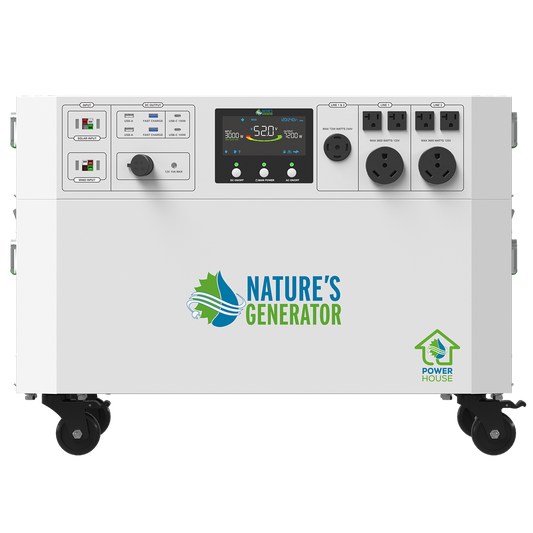
How does Eco Mode maximize your generator's efficiency?
Eco Mode, or energy-saving mode, is a smart operational setting designed to reduce the internal power consumption of your backup system. Based on our hands-on evaluation, a common source of battery depletion isn't the appliances you intentionally plug in, but rather the energy the system consumes just by remaining turned on.
When your backup system is active, its internal pure sine wave inverter converts stored direct current (DC) battery power into the alternating current (AC) electricity used by standard household outlets. This conversion process requires continuous operational energy, even if no appliances are actively drawing electricity. When Eco Mode is activated, the system intelligently monitors output loads. If the power demand drops below a specific threshold, the system alters its operational state or schedules an automatic shutdown of the inactive inverter lines. This prevents your battery reserves from slowly draining away during periods of low activity.
Why do solar generators consume battery power even when nothing is active?
Our technical division frequently fields questions about tare loss, which refers to the baseline standby power an inverter uses to keep its circuitry energized. A high-capacity 7,200W split-phase inverter needs to be ready to deliver massive startup surges at any second. To maintain this readiness, it pulls a constant stream of watts from the battery bank even if your house is completely asleep and drawing zero power.
Leaving a system running overnight without smart efficiency restrictions can drain a noticeable percentage of your capacity before sunrise. Our field experts have noted that Eco Mode directly combats tare loss by putting the heavy-duty conversion components into a dormant standby state when total load drops below twenty watts for a prolonged window.
When should you activate Eco Mode during a power outage?
Determining the ideal moments to engage energy-saving features depends heavily on your immediate electrical demands and the time of day. Based on our experience, implementing a strategic schedule for your efficiency settings will significantly prolong your runtime during an extended grid failure.
We highly recommend utilizing Eco Mode overnight. Between the hours of 11:00 PM and 6:00 AM, most household power usage drops to a baseline level, typically consisting of just a refrigerator cycling on and off. Engaging the energy-saving features before bed prevents the inverter from continuously exhausting the batteries during hours when nobody is awake to use the electricity. Conversely, during peak afternoon hours when your solar panel array is actively generating maximum incoming power, you can safely deactivate Eco Mode to handle high-wattage chores like washing laundry or running water pumps.
How do smart efficiency settings handle cyclical appliances like refrigerators?
A primary concern for homeowners is whether saving energy will compromise food preservation. Modern smart power stations handle this beautifully. When a refrigerator finishes its cooling cycle and its compressor clicks off, the power demand drops to nearly zero. The generator detects this drop and initiates its low-power standby state.
As soon as the refrigerator internal thermostat triggers a new cooling cycle, the sudden demand for electricity wakes the inverter instantly. This seamless transition provides continuous protection for your food supply while ensuring that the generator is not burning precious watt-hours during the minutes or hours when the appliance compressor is completely idle.
What are the best energy-saving tips for whole-home backup power?
To get the absolute most out of your clean energy investment, turning on a single switch is only the first step. Our team has compiled several advanced strategies that complement smart generator settings to maximize your household energy resilience.
-
Stagger Heavy Startup Demands: High-wattage equipment requires a massive surge of power to start up. Avoid running a 240V well pump at the exact same moment a microwave or toaster oven is operating. Spacing out these high-demand tasks prevents the generator from hitting overload thresholds and keeps total power draw within the most efficient operating zones.
-
Eliminate Parasitic Electronic Loads: Many modern devices draw phantom power even when turned off. Smart televisions, computer monitors, gaming consoles, and microwave clocks continuously sip small amounts of electricity. Unplugging these items or switching off their respective power strips removes unnecessary baseline drag on your system.
-
Prioritize Vital Circuits: Map out your home's electrical needs before an emergency occurs. Focus your power distribution strictly on necessities such as medical equipment, deep freezers, modems, and basic LED lighting.
How does a transfer switch help optimize your daily battery reserve?
Integrating a dedicated transfer switch into your backup strategy is the ultimate way to eliminate energy waste. Instead of running a chaotic web of extension cords across your living room floor, a manual or automatic transfer switch links the generator directly to your home's main breaker panel.
This hardwired connection allows you to isolate and activate only the specific breaker switches you need. Our team's assessment reveals that isolating circuits via a transfer switch prevents electricity from traveling down unnecessary household lines where hidden devices might steal power, allowing you to direct every ounce of stored clean energy exactly where it matters most.
|
Power Management Strategy |
Target Savings |
Primary Benefit |
|
Active Inverter Eco-Standby |
15% to 25% battery preservation |
Minimizes baseline tare loss during zero-load periods |
|
Phantom Load Disconnection |
50W to 150W continuous reduction |
Removes constant background drain from idle electronics |
|
Load Staggering & Sequencing |
Prevention of overload trips |
Optimizes inverter performance and extends overall battery life |
|
Circuit Isolation via Transfer Switch |
Precise control over active lines |
Prevents power tracking to non-essential household appliances |
How does Nature's Generator Powerhouse utilize smart efficiency controls?
When looking for a dependable solution to secure your home's energy independence, the architectural design of your equipment makes all the difference. The Powerhouse Gen 2 Whole Home Generator is engineered precisely to handle high-demand home emergency scenarios with maximum efficiency.
Equipped with a robust 4,800Wh sealed lead-acid battery bank and a 7,200W maximum split-phase pure sine wave inverter, the Powerhouse provides simultaneous 120V and 240V outputs. Consequently, the system isolates Line 1 to safely power delicate personal devices while simultaneously routing high-capacity current through Line 2 for demanding equipment like furnace blowers and well pumps. Because it features built-in smart management pathways, it works harmoniously with external solar arrays supporting up to 2,000W of solar input and wind turbines delivering up to 1,000W of supplemental charging. Instead of relying on a fixed-capacity standby system that burns expensive, noisy fossil fuels regardless of your actual home load, this expandable eco-system allows you to capture free natural energy and manage its consumption down to the single watt.
The ability to expand your storage capacity by plugging in additional Power Pods directly via a simple expansion cable means you don't need a professional electrician to upgrade your runtime. The system scales effortlessly alongside your family's needs.
Why is an expandable solar ecosystem superior to a fixed-capacity standby generator?
Traditional gas standby units must keep their internal combustion engines spinning at a constant speed to maintain correct voltage and frequency output. This means that whether you are running a single light bulb or a whole-house air conditioner, the engine consumes a large baseline of fuel per hour.
A comprehensive solar power generator eco-system operates silently and scales its energy expenditure perfectly to match the load. When your home power needs drop, the internal smart controls immediately scale down the energy conversion. There are no fumes, no loud engine noises disrupting your neighborhood, and zero dollars spent on recurring fuel costs. This modular flexibility makes an expandable clean energy system a far more reliable and economical long-term investment for forward-thinking homeowners.
What do real homeowners say about running their backup systems efficiently?
Actual case studies demonstrate the profound difference that strategic power allocation can make during a severe crisis. Our team loves gathering customer feedback to see how families handle real-world challenges using our technology.
Consider the example of a family in the Midwest who experienced a three-day blackout following a severe summer storm. Operating with a standard Powerhouse setup paired with four solar panels, they initially kept all their household circuits linked. By the first evening, they noticed their battery capacity was dropping quicker than expected due to hidden phantom draws across their home.
After consulting our team's operational guidelines, they activated the system's eco-conscious monitoring strategies, unplugged non-essential entertainment electronics, and isolated their power strictly to their refrigerator, water pump, and router. Over the next two days, their system successfully maintained their critical infrastructure. The solar input fully replenished their battery bank each afternoon, proving that a blend of smart equipment design and deliberate energy habits provides unmatched peace of mind.
Conclusion
Maximizing the efficiency of your home power system is the key to surviving long-term grid outages comfortably. Features like Eco Mode protect your valuable battery reserves from being wasted on standby tare loss, ensuring that every watt generated by your solar array goes toward keeping your critical appliances online. By combining smart system settings with practical habits like staggering heavy loads and using a dedicated transfer switch, you can achieve true energy security.


