


Picking the right backup power setup comes down to one simple thing: making sure your generator can run the gear you actually care about when the power goes out. Whether you need portable backup power to keep your fridge and phones running during a storm, a flexible solar power generator for off-grid weekends, or a heavy-duty whole home power generator that can start your central AC without sweating, Nature's Generator has a setup built for the job. Having reliable backup power is about keeping your household safe, comfortable, and stress-free when the utility grid gives out.
In this guide, our team breaks down three popular options from Nature's Generator: the Nature’s Generator Elite, the Powerhouse Gen 2, and the high-capacity Nature’s Generator MyGrid 10K. Based on our hands-on experience testing power gear in real-world conditions, we will help you figure out how much battery storage you actually need, how these models handle heavy appliances, and which unit gives you the best return on your investment.
What Are the Key Performance Differences Between the Elite, Powerhouse Gen 2, and MyGrid 10K?
When you line up these three systems side by side, the biggest differences come down to how much power they can push out at once, what kind of outlets they use, and how long their batteries are built to last.
Here is how that breaks down:
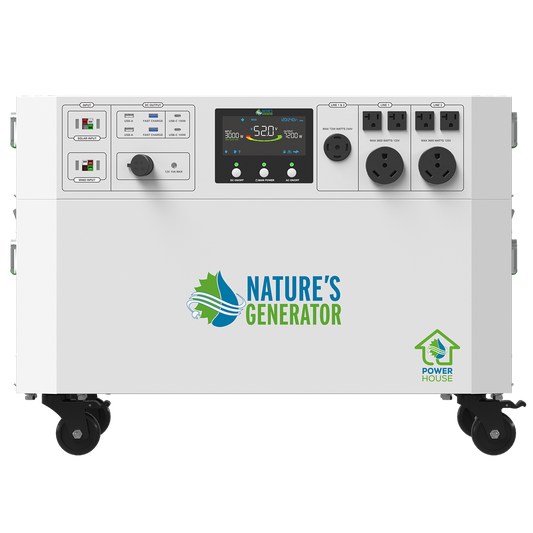
The Nature's Generator Elite is built to power standard 120V household items plugged right into its front outlets. It provides 2,880 watts of continuous power, which gives you plenty of juice for kitchen appliances, tools, and entertainment gear.
The Powerhouse Gen 2 is a big step up. It cranks out 7,200 watts continuously and can handle momentary power spikes up to 14,400 watts. Because it offers 120V/240V split-phase power, it can run heavy-duty equipment like well pumps, electric water heaters, and clothes dryers that normal 120V generators simply cannot start.
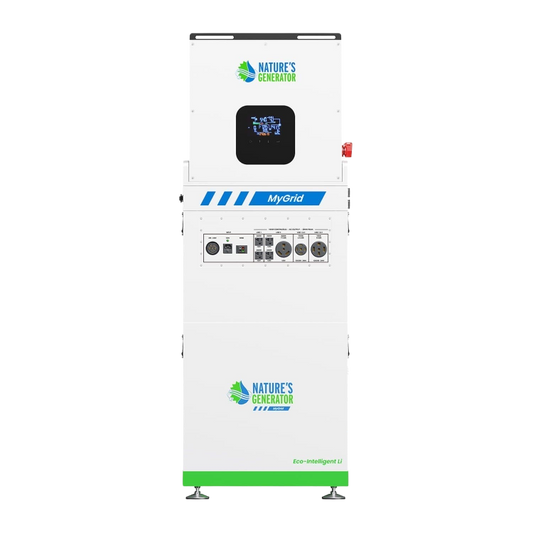
The MyGrid 10K sits at the very top of the lineup. With a continuous output of 10,000 watts and a massive 20,000-watt peak surge capacity, this unit is designed to handle an entire home. It also uses advanced Lithium Iron Phosphate (LiFePO4) battery technology, meaning you can charge and drain it over 6,000 times before seeing significant battery wear.
How Do Your Household Power Demands Determine Which Generator Capacity You Need?
Choosing the right generator comes down to listing what you need to run during an outage and figuring out their starting and running wattages. In our experience testing emergency setups, people often forget that motors—like the ones inside refrigerators, air conditioners, and water pumps—need a quick burst of extra power just to turn on.
Scenario 1: Keeping the Emergency Basics On
If you just want to keep food fresh, stay connected, and keep a few lights on during a blackout, you do not need a massive home installation.
-
What you are running: Refrigerator (150W running / 800W starting surge), Wi-Fi router (15W), laptop charger (65W), CPAP machine (40W), and LED lamps (50W).
-
Total power draw: Around 320 watts continuous.
-
Which model fits: The Nature's Generator Elite handles this load easily. Its 1,200Wh internal battery will keep these basics running for hours, and you can plug in solar panels during the day to keep charging while you use it.
Scenario 2: Backing Up Heavy Household Circuits
If you live in an area prone to severe weather and need to power heavy 240V gear through your home's breaker box, you need more muscle.
-
What you are running: A 240V well pump (1,500W running / 3,500W surge), a full-size kitchen fridge, a microwave (1,200W), television, and multiple rooms of lighting.
-
Total power draw: Around 3,200 watts continuous, with high starting surges.
-
Which model fits: The Powerhouse Gen 2 is made for this. It has the 240V output needed for well pumps and heavy appliances, plus enough surge protection to keep lights from flickering when motors kick on.
Scenario 3: Off-Grid Living or Total Home Backup
If you want to run central air conditioning, cook on electric stoves, or live completely off the grid without worrying about power budgets, you need utility-scale energy.
-
What you are running: A 3-ton central AC unit (3,500W), electric water heater (4,500W), kitchen cooktop, and a full household full of electronics.
-
Total power draw: Up to 10,000 watts during peak household activity.
-
Which model fits: The MyGrid 10K delivers the massive output and 10.5kWh storage capacity required for total energy independence. Feedback from customers off the grid shows it easily handles daily household demands without forcing families to compromise on comfort.
AGM vs. LiFePO4: Which Battery Type Is Right for You?
The kind of battery inside your generator affects its weight, overall lifespan, maintenance needs, and price tag.
AGM Lead-Acid Batteries
The Elite and Powerhouse Gen 2 use heavy-duty AGM (Absorbed Glass Mat) sealed lead-acid batteries.
-
Why people choose AGM: It is a proven, reliable technology with a much lower initial price point. If you primarily want emergency backup for seasonal winter storms or summer blackouts a few times a year, AGM gives you solid performance without a big upfront bill.
-
Maintenance tip: To keep AGM batteries healthy when sitting in storage, keep them plugged into the wall or top them off every four months.
Lithium Iron Phosphate (LiFePO4)
The MyGrid 10K uses high-grade LiFePO4 battery cells managed by a smart internal protection system.
-
Unbeatable lifespan: Rated for 6,000+ full charge cycles. Even if you fully charge and drain this battery every single day, it is built to last 15 years or more before dropping to 80% capacity.
-
More usable energy: You can safely drain a lithium battery almost all the way down without damaging it, giving you access to more of its total power reserves.
-
Lighter for its size: Lithium packs far more energy into a smaller, cleaner footprint, allowing the MyGrid 10K to store over 10,000 watt-hours in a sleek upright cabinet.
Do You Need a Portable Unit on Wheels or a Plugged-In Home Setup?
How you plan to physically use your generator is just as important as how many watts it produces.
Portable and Flexible: Nature's Generator Elite
The Elite comes with a sturdy frame, heavy-duty wheels, and a pull handle. Weighing 120 lbs, it can easily be rolled out to your patio, put in the back of a truck for job sites, or moved into your living room during a power outage. If you rent your home or do not want to hire an electrician to wire up a permanent panel, the Elite lets you plug appliances straight into the front outlets right out of the box.
Direct Home Integration: Powerhouse Gen 2 & MyGrid 10K
The Powerhouse Gen 2 and MyGrid 10K are designed to connect directly to your home's main electrical panel using a transfer switch.
-
Instant power switching: The Powerhouse Gen 2 can detect a power blackout and switch over to battery power in less than 10 milliseconds. That means computers, Wi-Fi routers, and TV screens will not even shut down or reboot when the power grid fails.
-
Sleek wall footprint: The MyGrid 10K uses a vertical tower design that sits flat against a garage wall, giving you massive energy storage without taking over your floor space.
How Fast Do Solar Panels and Wind Turbines Recharge These Units?
A backup system is only as good as its ability to recharge during long grid failures. The energy products available on the official Nature’s Generator website support charging from solar panels, wind turbines, and standard wall outlets—often all at the same time.
Solar Charging Performance
-
Elite (300W solar max): Recharges in about 10 to 12 hours of clear sunlight using standard solar panels.
-
Powerhouse Gen 2 (2,000W solar max): Can handle up to 2,000 watts of solar input. With four 440W solar panels connected, its 4,800Wh battery bank can recharge in as little as 3 to 4 hours of good sun.
-
MyGrid 10K (Dual high-capacity input): Built to hook up to large rooftop or ground solar arrays, making sure even its massive 10.5kWh battery can top off in a single sunny day.
Why Adding Wind Power Matters
Solar panels work great when the sun is shining, but storms and nighttime blackouts leave you without solar power. Adding a Nature's Generator Wind Turbine (300W for the Elite, or 1,000W for the Powerhouse and MyGrid) lets you pull clean power from day and night winds. This hybrid setup keeps electricity flowing into your battery bank 24 hours a day.
Quick Checklist: Which Model Matches Your Goals?
Use this guide to find the right fit.
-
Pick the Nature's Generator Elite if: You want an affordable, portable system on wheels to run basic 120V household items, power tools, or camping gear without dealing with custom electrical wiring.
-
Pick the Powerhouse Gen 2 if: You want to backup important home circuits through a transfer switch, run 240V gear like well pumps, and want expandable storage at a fair price.
-
Pick the Nature's Generator MyGrid 10K if: You want top-tier power, long-lasting lithium technology that lasts 15+ years, 10,000 watts of continuous output, and total protection against power outages.
Getting the right backup power setup comes down to choosing a system that handles your continuous power needs today while giving you room to grow tomorrow. Whether you start with a portable unit like the Elite or step up to a whole-house solution like the Powerhouse Gen 2 or MyGrid 10K, Nature's Generator provides clean, quiet, and reliable power whenever you need it most.


