


Trying to figure out if you need a 30A or 50A transfer switch? Don't sweat it. The choice just boils down to how much juice your generator puts out and what you actually want to keep running when the lights go out.
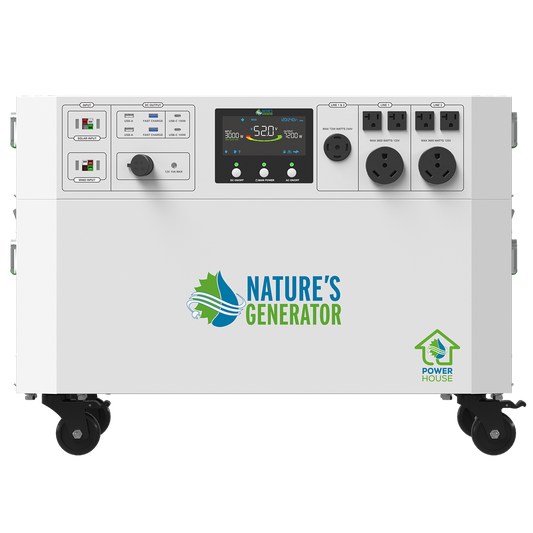
Nature’s Generator offers both options for homeowners building a reliable backup power system. Whether you use a solar power generator, a whole home power generator, or a portable backup power system, choosing the right transfer switch helps you send backup electricity to selected household circuits.
In this guide, we’ll compare 30A vs. 50A automatic transfer switches, explain how many circuits each can support, and walk through everyday examples to help you choose the right subpanel kit for your home.
What is the difference between a 30A and 50A automatic transfer switch?
The biggest difference is the amount of backup current each switch is rated to handle and how many circuits it can accommodate. A 30A automatic transfer switch is designed for a 30-amp backup connection, while a 50A model supports a higher-rated 50-amp connection.
Both Nature’s Generator models can transfer selected household circuits between utility power and a compatible backup power source. The right choice depends on your generator, your home's electrical setup, and the appliances you plan to run.
Here’s a side-by-side comparison.
|
Feature |
30A automatic transfer switch |
50A automatic transfer switch |
|
Backup input rating |
30A |
50A |
|
Bus bar rating |
50A |
63A |
|
Panel spaces |
8 |
12 |
|
Maximum circuit capacity |
Up to 16 with compatible tandem breakers |
Up to 24 with compatible tandem breakers |
|
Supported voltage configurations |
120V, 120/208V, and 120/240V |
120V, 120/208V, and 120/240V |
|
Approximate weight |
48 lb |
61.5 lb |
|
Warranty |
5-year limited warranty |
5-year limited warranty |
The 30A model has a 50A-rated bus bar, but that does not make its backup input a 50A connection. The 50A model has a 63A-rated bus bar and supports a backup input rated for up to 50A.
The important point is that a transfer switch does not increase your generator’s power output. It manages how power reaches selected circuits. Your generator's actual output and the appliances you connect determine how much electricity you can use.
Should you choose a 30A or 50A transfer switch for your home?
Start by listing the appliances you want to run during an outage. This works much better than just picking a transfer switch based on how big your home is.
A 30A transfer switch may suit a home that needs backup power for a smaller group of essential circuits, such as:
-
Refrigerator and freezer
-
Bedroom and hallway lights
-
Internet modem and router
-
Home office equipment
-
Selected outlets for charging phones and small devices
A 50A transfer switch may be a better fit if you want to connect more circuits or plan for a larger backup system. You might also want to add extra lights, kitchen outlets, a compatible water pump, or specific heating and AC units to your list.
Just remember, hooking up more circuits doesn't mean you can turn on every single appliance at the same time. For example, an air conditioner or water pump may draw extra power when starting. Your generator must be able to handle those demands as well as the power used by appliances already running.
Our advice is to make your appliance list first, then check the generator's continuous output and startup capacity. A electrician can look over these details to guide you toward the right transfer switch and narrow down which circuits are worth backing up.
How many circuits can you plug into each Nature’s Generator transfer switch?
The 30A model has eight panel spaces and can support up to 16 circuits with compatible tandem breakers. The 50A model has 12 panel spaces and can support up to 24 circuits with compatible tandem breakers.
A panel space is the physical room a breaker takes up in the panel. A circuit is the electrical path that supplies power to an appliance or group of outlets. Some approved tandem breakers can serve two circuits in one space, which is why the maximum circuit count can be higher than the number of spaces.
For example, a homeowner may want separate circuits for the refrigerator, kitchen lighting, bedroom outlets, and home office. Having more panel spaces can give an electrician greater flexibility when planning the backup setup.
However, you may not need the maximum circuit count. If your priority is keeping a few essentials running, a 30A model may provide enough room for the circuits you need.
Before choosing, ask your electrician to confirm the required breaker types, available panel spaces, and local electrical code requirements. The final circuit count depends on the approved panel configuration, not just the number shown on the product page.
Which transfer switch works with your Nature’s Generator system?
Your transfer switch must match your generator's output, voltage, connection type, and installation requirements. Just because the voltage matches doesn't mean everything will work together smoothly.
When does a 30A transfer switch make sense?
The 30A model is worth considering when your generator supports a compatible 30A connection and you want to back up a focused group of household circuits.
Imagine that your main concerns during an outage are keeping food cold, maintaining internet access, charging phones, and having lights in a few rooms. As long as those power needs stay within what your generator can handle, a 30A setup is a super practical pick.
It's also a solid route to go if you don't plan on adding a bunch of extra backup circuits down the road. You can focus on essential equipment without paying for panel capacity you may not use.
Always double-check your generator’s manual and plug specs before buying anything. Just because your generator has a 30A outlet doesn't mean it can handle running every single circuit hooked to the switch simultaneously.
When should you consider a 50A transfer switch?
A 50A model is worth considering when your generator supports the required 50A connection and your installation needs the additional capacity or panel spaces.
For example, homeowners considering the Nature’s Generator MyGrid 10K Gen 2 can review its 10,000W power rating and 120/240V output when planning a home backup system. The 50A transfer switch may be suitable for a compatible installation, but the generator, wiring, and planned loads must all be checked.
At 240V, a 50A connection represents a nominal capacity of 12,000 volt-amperes. That does not mean a generator rated for 10,000W can deliver 12,000W. The generator's own output limits still apply.
Try tailoring your transfer switch choice to your actual energy demands and the specific generator you plan to run. Review the equipment specifications and have a qualified electrician confirm that the complete setup is compatible.
What does each transfer switch look like in a real home backup setup?
Real-life examples can make the choice easier.
Example 1: A small group of essential circuits
A homeowner wants the refrigerator, a few lights, internet equipment, and selected outlets to work during an outage.
A 30A transfer switch should do the trick as long as your generator can handle the total power draw. The electrician can prioritize those circuits, helping the homeowner focus available power on the things that matter most.
This setup makes sense when the goal is to keep daily life manageable rather than run every appliance in the house.
Example 2: More circuits for a busy household
A family wants backup coverage for refrigeration, several lighting zones, home office equipment, and a compatible water pump.
The 50A model offers more panel spaces and supports a higher-rated backup connection. This gives the electrician more options when organizing the circuits.
The next step is to calculate how much power the family will use. The household may need to turn off certain appliances or avoid running several high-demand devices at the same time.
Example 3: A homeowner planning future upgrades
A homeowner expects to expand the backup system or connect more household circuits later.
In this case, a 50A transfer switch may be worth considering if the planned generator and electrical installation can support it. Still, buying a larger switch before checking the system can add cost without providing more usable power today.
Talk with your electrician about which circuits you need now and what changes may be possible later. This helps you make a decision based on a real plan rather than guessing what you might need.
Does a 50A transfer switch give you more backup runtime?
Nope. Stepping up to a 50A transfer switch won't stretch your generator's run time any longer than a 30A model would.
Runtime depends mainly on the energy stored in the generator's battery, how much power your appliances use, and whether you can recharge the system while it is operating. All the transfer switch does is route power to your home’s circuits—it doesn't boost your battery life or store extra energy.
For example, a backup system supplying 1,000W will generally use its stored energy more slowly than the same system supplying 4,000W, assuming similar operating conditions.
If longer outages are your concern, look at the generator's battery capacity and charging options. Solar charging or supported AC charging may help you replenish stored energy, depending on the system and available conditions.
Before making a purchase, answer three separate questions:
-
How many circuits do I need? This helps determine the panel capacity.
-
How much power can my generator provide? This determines which appliances you can run together.
-
How long do I need backup power? This helps determine how much battery storage and recharging capability you need.
Keeping these questions separate makes it easier to choose equipment that meets your actual needs.
What key details should you double-check before pulling the trigger on a 30A or 50A ATS kit?
Before ordering a transfer switch, go through these five checks with your electrician.
1. Check your generator's output. Confirm its continuous wattage, supported voltage, amperage, outlet type, and connection requirements. Your transfer switch and generator need to play nice together, so make sure they’re fully compatible.
2. List the circuits you want to back up. Include the appliances on each circuit and their power requirements. Remember that some equipment needs extra power to start.
3. Confirm the panel and breaker setup. Check the number of spaces you need and which breakers are approved for the selected model. Don't assume every breaker will fit.
4. Review what's included in the kit. Nature’s Generator lists a power inlet box, power cord, manual override handle, and user manual for both models. Standard and pre-wired versions are available, so check the exact package details before ordering.
5. Plan the installation properly. The transfer switch, wiring, inlet location, and connection to your home must meet applicable electrical requirements. Nature’s Generator states that installation should be performed by a licensed electrician.
A quick review of these details can help you avoid buying a switch that doesn't match your generator or your planned circuit layout.
Is a 30A or 50A transfer switch better for long-term use?
Neither option is automatically better for every home. The best choice is the one that matches your generator, your essential circuits, and your plans for the future.
Choose the 30A model if your generator supports a compatible 30A connection and you only need a selected group of essential circuits. Its capacity of up to 16 circuits may be enough for a focused backup plan.
Consider the 50A model if your compatible generator and electrical setup call for a higher-rated connection or if you need more panel spaces. It supports up to 24 circuits, giving you more flexibility when planning the installation.
The most important thing is to avoid paying for capacity that your generator cannot use. A larger transfer switch doesn't increase the generator's output, and extra circuits do not guarantee that all connected appliances can run at once.
If you're still unsure, prepare a list of essential appliances and have a licensed electrician review the list alongside your generator's specifications.
Choose the right transfer switch for your backup plan
Choosing between a 30A and 50A automatic transfer switch comes down to three things: your generator's output, the number of circuits you want to back up, and whether you expect your needs to change.
Nature’s Generator has both setups available so you can match whatever power backup your home needs.. The 30A model can handle up to 16 circuits, while the 50A model can handle up to 24 with compatible tandem breakers. Neither one creates extra power, so your generator's output and your household's electrical demand must guide your decision.
Start with the appliances you need most, check your generator's connection and power limits, and work with a licensed electrician to confirm the right kit. A well-matched setup can help you keep essential parts of your home running when the grid goes down.


