


Putting your hard-earned money into a whole home power generator gives you peace of mind. But when you are setting up a beefy solar power generator to get some reliable backup power, or putting a smaller portable backup power kit through its paces, you want to know exactly what is happening under the hood. Our team at Nature’s Generator hears from folks all the time who scratch their heads over one weird quirk: why DC loads bypass the output wattage screen entirely. You plug something in, it runs fine, but the display just sits there staring back at you with a big fat zero. It can feel like you got a lemon, but we can assure you it's working exactly as intended.
Imagine the grid goes down during a nasty summer thunderstorm. Your house goes pitch black, the air conditioning cuts out, and the kids start losing their minds. You head out to the garage, fire up your backup hub, and hook up your essentials. You check the digital dashboard to see how much juice your setup is pulling. For standard household stuff, the screen works instantly. Your full-sized kitchen fridge or your sump pump kicks on, and the numbers jump up, showing you the exact wattage draw.
But then you plug your phone, an internet router, or a 12-volt camping cooler directly into the direct current ports. The devices power up perfectly, yet the screen refuses to budge from 0W.
In our experience troubleshooting off-grid setups for over twenty years, this little visual hiccup sends a lot of folks into a minor panic. People assume a wire shook loose inside during shipping, or maybe the firmware is glitching out. The truth is way more interesting—and it is actually a sign of smart engineering. Let's peel back the metal cover and look at the internal electrical plumbing to see exactly why this happens and why it is actually saving you precious battery life.
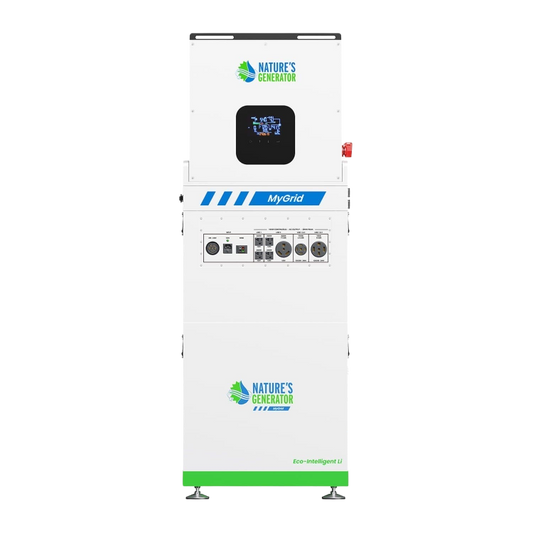
Why does the Nature’s Generator Powerhouse display show 0W when using DC outlets?
To get to the bottom of the zero-watt mystery, you have to look at where the system keeps its electronic eyes. The machine is packed with a massive internal battery pack and a heavy-duty inverter meant to push serious juice through a manual or automatic transfer switch kits directly into your home breaker box.
The main reason your direct current gadgets do not register on the digital screen comes down to the physical layout of the internal monitoring shunts. These shunts are basically the tiny electronic toll booths that count up how many electrons are passing through a wire. In this specific rig, the calculation engine that drives the output display is hardwired directly inside the alternating current inverter assembly. It is built to keep track of the electricity running through the high-voltage transformers and the standard household plugs. When you plug a vacuum or a microwave into the AC outlets, the current has to travel straight through that inverter block, which lets the sensors read the flow, calculate the total watts, and spit that number onto the screen.
The direct current ports operate on a completely separate track. Sockets like the 12V barrel ports or the fast-charging USB ports are wired straight into the main battery distribution busbar. Because this electricity completely sidesteps the central inverter, those traveling electrons never cross the path of the AC monitoring sensors. The control panel reads 0W because, as far as those specific sensors are concerned, nothing is moving through their lane. It is totally normal behavior for the hardware and just means your electricity is taking a shortcut straight from the battery core.
How does the internal architecture separate AC and DC power distribution?
Our team spends a lot of time analyzing electrical schematics to help folks eke out every last bit of runtime during an emergency. If you look at the internal blueprint of this unit, you will see that the electrical pathways are cleanly split into two distinct neighborhoods: the converted alternating current side and the native direct current side.
The alternating current side is the heavy lifter, and it depends entirely on the pure sine wave inverter. Remember, solar panels and storage batteries naturally hold onto energy as direct current. Because your standard household appliances are designed to run on the alternating current coming out of your home wall sockets, the inverter has to do some serious work. It takes that low-voltage battery power, cranks the voltage way up, and smooths out the electrical wave so it matches the grid. To keep you informed, engineers put the measurement sensors right at the exit gate of this inversion system. Every single watt leaving through those traditional plugs gets counted here, which is why your screen updates instantly when you run a TV or a blender.
The native direct current side is a much simpler, no-nonsense setup. Instead of routing power through copper coils, heavy transformers, and extra circuit boards, the DC ports hook up directly to the regulated side of the main battery management system. The power travels a very short distance over solid copper rails straight to your low-voltage gear. By keeping the direct current lines completely isolated from the high-capacity inverter, the system avoids electrical interference and keeps your smaller gadgets running happily without needing to wake up the high-voltage systems.
What are the efficiency benefits of bypassing the inverter with DC loads?
When you are dealing with an extended power outage after a massive blizzard or a hurricane, every single watt-hour in your battery is worth its weight in gold. Bypassing the big inverter for your smaller direct current gear is a deliberate design choice that stops conversion loss dead in its tracks and keeps your system running longer.
Every single time a solar power setup forces direct current through an inverter to make alternating current, you lose a little bit of energy to what we call the heat tax. No electrical conversion is perfectly seamless. Even top-tier, industrial-grade components lose about 10% to 15% of their total power as waste heat when they step up the voltage and shape the electrical wave.
On top of that, huge residential-sized inverters suffer from something called parasitic draw or standby overhead. Just keeping the inverter turned on—even if nothing is plugged into it—takes a baseline amount of electricity to keep its internal brain awake, run its diagnostic checks, and keep its cooling fans idling. If you keep that massive inverter running just to juice up a 5-watt smartphone or run a tiny 12-volt camping fridge, you are wasting a ton of battery capacity just keeping the inverter itself alive.
By plugging into the native direct current outlets on your solar power station solutions, your low-draw gadgets pull raw power straight from the source. The big inverter can stay in its low-power sleep mode. Based on our experience, leaning heavily on these direct DC channels can add hours, sometimes even days, to your total runtime during an extended emergency. You skip the conversion tax entirely, keep the inside of the machine running cool, and make sure every scrap of energy in your battery goes toward keeping your critical gear powered up.
Which household appliances run on DC versus AC power during a backup power scenario?
To put together a solid game plan for an outage, it helps to understand which electronics can run natively on direct current and which ones absolutely need the brute force of the alternating current inverter. A lot of homeowners are surprised to find out that many common gadgets inside their houses are secretly direct current devices at heart, even if they have a standard three-prong plug.
A massive chunk of your everyday tech—things like internet routers, modems, laptops, LED string lights, smartphones, and even CPAP medical machines—fundamentally operate on direct current. When you plug your laptop into a standard wall socket, that heavy plastic brick on the power cord is actually a miniature transformer, changing your home's alternating current back down into direct current for the computer. By picking up a cheap 12V car-style adapter cord or plugging right into the built-in USB slots on your portable backup unit, you skip those messy conversions altogether. We have seen plenty of real-world scenarios where folks kept their home internet and communication lines open for days on end just by running their routers directly off the DC bus, barely putting a dent in their main battery bank.
Tech Tip: Check the labels on your electronics. If you see an external power brick that lists an "Output" in DC volts (like 12V, 19V, or 5V), that device can likely be run far more solar generator collectionsefficiently via native DC power ports using the right adapter.
On the other hand, heavy-duty household appliances and anything with a large motor absolutely require the alternating current side of the house. Things like deep well pumps, kitchen refrigerators, countertop microwaves, medical oxygen concentrators, and portable space heaters rely on alternating current to spin their internal motors or run their heavy compressors. These big-ticket items have to go into the dedicated AC plugs, where their massive power consumption will be properly tracked and displayed on the screen so you don't accidentally overload your setup.
How can you optimize your energy usage using both power options?
Smart energy management is what separates a smooth, stress-free backup experience from an early, unexpected blackout in your living room. Based on our years of testing off-grid gear, the best way to manage your power station is to split your daily routine into two different strategies depending on whether the sun is up or down.
During the middle of the day, when your solar generator are tethered to a row of solar panels and soaking up a steady stream of free sunshine, you can use your heavy alternating current appliances without worrying too much. This is the perfect window to cycle your well pump, let your kitchen fridge cool down, or run a quick load of laundry. Because the inverter is fully active and measuring everything, you can keep an eye on the digital display to make sure your total wattage load stays safely below the unit's maximum capacity.
|
Power Type |
Best For |
Inverter Needed? |
Screen Shows Watts? |
|
AC (Alternating Current) |
Fridges, Microwaves, Sump Pumps, Power Tools |
Yes |
Yes |
|
DC (Direct Current) |
Phones, Laptops, Routers, CPAP Machines, 12V Coolers |
No |
No |
When night falls and your solar panels stop producing, it is time to switch over to battery preservation mode. We highly recommend turning off the AC inverter toggle completely if you don't have any large appliances that absolutely need to run overnight. By shifting your nighttime needs over to the direct current ports—like using 12V LED lights to read, charging your family's phones, and powering DC-compatible medical gear—you eliminate the idle power drain of the large inverter block. Even though your control screen will read a flat zero watts and look like it is asleep, your critical low-draw gear will keep getting clean power all night long. This easy trick protects your primary battery bank so you have plenty of energy left when you wake up the next morning.
If you find that your household power needs are starting to outpace your current setup over time, you don't have to resort to strict power rationing. The beautiful thing about modular engineering is that you can always scale up your system by daisy-chaining extra heavy-duty battery add-ons to instantly double or triple your total storage capacity, giving you plenty of extra cushion for both your AC and DC electronics.
Mastering the Zero: How System Insight Translates to Total Power Confidence
Getting a handle on the technical inner workings of home backup systems might seem a bit overwhelming at first, but once you know the basics, you can run your equipment like a seasoned pro. Spotting a zero-watt reading on your digital control board while running smaller tech through the direct current outlets isn't a flaw or a broken sensor. It is just visual proof of a clever internal layout built from the ground up to cut down on heat, eliminate energy conversion waste, and stretch your battery capacity as far as humanly possible.
By learning to balance your power-hungry alternating current appliances with your hyper-efficient direct current electronics, you can stop wasting energy and get the absolute most value out of your backup equipment. When a major grid failure hits your neighborhood, knowing exactly how your power hub routes electricity gives you the confidence to make smart, real-time adjustments to your lifestyle. Whether you are working toward building a completely independent off-grid homestead or just want a rock-solid safety net for your family, trusting your backup needs to a high-quality Nature’s Generator system gives you the engineering reliability and system flexibility you need and more.


