


Achieving true energy autonomy requires moving past temporary fixes and establishing a permanent, bulletproof architecture for your family's reliable backup power needs. Today, forward-thinking homeowners are increasingly bypassing traditional fossil-fueled backup infrastructure in favor of a sustainable solar power generator setup. Whether you are aiming to establish a comprehensive whole home power generator solution to keep your entire property humming or utilizing a highly maneuverable portable backup power system to safeguard critical emergency circuits, one central technical challenge remains: bridging your independent energy supply with your home’s existing electrical architecture. At Nature's Generator, we design eco-friendly ecosystem options that empower users to break free from utility dependence cleanly, but maximum safety requires a precise understanding of power integration mechanics. This complete guide breaks down the critical design choices, costs, and installation methodologies surrounding the debate between automatic vs. manual transfer switches for your DIY residential solar backup integration project.
Why Is a Transfer Switch Essential for Safe Solar Generator Integration?
Many novice solar enthusiasts assume that connecting an emergency power supply to a home is as straightforward as plugging the generator into a standard wall outlet via a dual-male extension cord. This dangerous, illegal practice is known as backfeeding. Based on our experience in the residential energy sector, backfeeding represents one of the most severe electrical hazards a homeowner can introduce to their property. Understanding the science behind backfeeding reveals why a dedicated transfer switch is a mandatory component of any home energy integration plan.
What is electrical backfeeding and why is it dangerous?
When you feed electricity from a generator directly into a home's convenience outlet without disconnecting from the main utility line, that electricity does not stop at your breaker panel. Instead, it travels backward through your panel, flows out through your main service meter, and enters the localized utility distribution lines. As this voltage passes backward through the utility transformer on your street corner, it undergoes a massive step-up process, transforming standard 120V or 240V residential currents into thousands of volts. This sudden, unannounced high-voltage surge puts utility line workers at immediate risk of fatal electrocution while they are actively working to repair downed power lines. Furthermore, if the utility grid suddenly re-energizes while your generator is backfeeding, the massive out-of-phase collision between the grid's power and your generator's power will instantly destroy your clean energy equipment, spark an electrical fire, or detonate your main electrical panel.
What does the National Electrical Code (NEC) require for residential backup power?
To eliminate the catastrophic risks of backfeeding, the National Electrical Code (NEC)—specifically Article 702 regarding Optional Standby Systems—explicitly mandates a reliable, code-compliant mechanism to isolate a standby power source from the main utility grid. A certified transfer switch uses a strict break-before-make mechanical design. This guarantees that the home's circuits can only connect to one power source at a single time. By physically breaking the connection with the utility grid before making the connection with the solar generator, the transfer switch builds a physical firewall that protects utility workers, guards your expensive solar hardware, satisfies local building inspectors, and ensures your homeowner's insurance policy remains valid in the event of an unforeseen incident.
How Does a Manual Transfer Switch Work with Your Solar Setup?
For DIYers looking for a cost-effective, straightforward, and highly reliable integration strategy, a manual transfer switch stands out as an exceptional candidate. These switches give you total control over how and when your solar backup energy is distributed throughout your living space, making them a favorite among practical homeowners who prefer a hands-on approach to disaster preparedness.
What are the mechanical components of a manual switch?
A manual transfer switch typically consists of an enclosure containing a series of heavy-duty mechanical toggles or a single large master lever. In a multi-circuit manual transfer panel, each critical household circuit is paired with an individual three-position switch labeled LINE, OFF, and GEN. When the grid is functioning normally, all toggles sit firmly in the LINE position, allowing grid power to flow straight from your main breaker to your appliances. If a blackout occurs, you must manually change the position of these toggles to the GEN position, which physically disconnects those specific breakers from the grid and paths them directly to your solar generator input inlet box.
What is the real-world operational experience during a blackout?
Let us explore a practical example. Imagine a severe winter ice storm rolls through your region at midnight, snapping tree branches and instantly knocking out the local power grid. Your house plunges into total darkness. With a manual transfer switch setup, your backup system will not engage automatically. You will need to grab a flashlight, make your way down to the basement, garage, or utility room where your transfer panel is mounted, and execute the startup sequence.
You first turn on your solar power generator unit, verify its battery bank state of charge, and then flip the individual circuit toggles on the transfer switch from LINE to GEN. Within seconds, your refrigerator, internet router, well pump, and living room lighting circuits wake back up. While this process requires physical human intervention and introduces a few minutes of downtime, it gives you absolute control over exactly which appliances draw from your solar reservoir, avoiding accidental battery depletion from non-essential loads.
Which transfer switch matches which system?
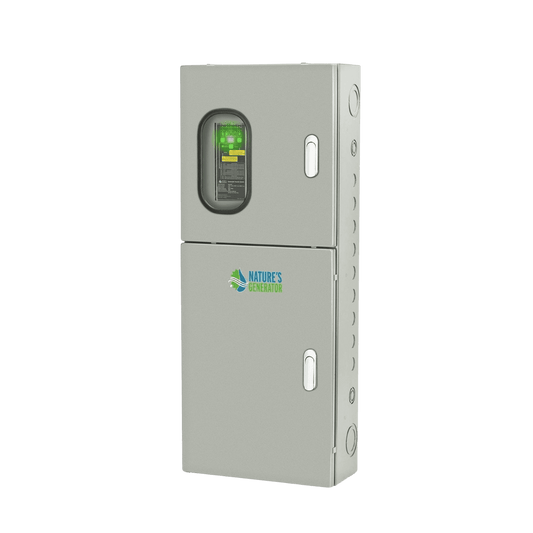
Nature's Generator currently offers several manual transfer switches:
-
120V 15A 4-Circuit Manual Transfer Switch
-
Designed for smaller 120V generators.
-
Ideal for essentials like lighting, Wi-Fi, refrigerators, and outlets.
-
Supports up to four selected circuits.
-
120V/240V 30A 6-Circuit Manual Transfer Switch
-
Designed for larger portable power stations such as the Powerhouse lineup.
-
Supports both 120V and 240V loads.
-
Can power up to six selected circuits.
-
120V/240V 30A or 50A 12-Circuit Manual Transfer Switch
-
Intended for higher-capacity whole-home systems like the MyGrid 10K.
-
Supports more circuits and larger electrical loads.
-
Available in both 30A and 50A versions depending on system capacity.
A manual transfer kit is the right choice if you don't mind manually switching circuits during an outage. It provides a safe, code-compliant way to power selected home circuits while preventing dangerous backfeeding into the utility grid.
How an Automatic Transfer Switch (ATS) Works—and Do You Actually Need One?
On the other side of the integration spectrum lies the Automatic Transfer Switch (ATS). This option represents the pinnacle of luxury, convenience, and continuous protection in the world of home energy resilience. An ATS completely removes human error and physical effort from emergency power management, functioning as an automated energy traffic controller that operates around the clock.
How does an ATS detect grid failure and transfer loads?
An ATS operates via specialized onboard electronic control logic that constantly samples incoming voltage from the utility company. The switch establishes an analytical baseline of acceptable electrical parameters (typically monitoring for drops below 80-90% of nominal grid voltage). The moment the utility grid experiences a brownout, blackout, or phase failure, the ATS detects this anomaly within milliseconds. It instantly triggers an internal motorized mechanism or heavy-duty magnetic contactor to open the main utility supply contacts. Once isolation is secured, it closes the generator contacts, allowing standby power to flood into the subpanel. When the utility grid eventually stabilizes, the ATS reverses this exact process, safely shifting your household loads back to the grid and placing the solar generator back into standby mode.
What home scenarios benefit most from an automatic switch?
An ATS becomes an absolute necessity rather than a luxury under specific domestic conditions. Consider households that manage sensitive medical equipment, such as home dialysis machines or oxygen concentrators, where even a three-minute interruption in power could lead to a life-threatening emergency. Similarly, remote professionals running critical data servers, smart-home automation cores, or active trading desks cannot tolerate power interruptions that drop internet connectivity and corrupt active data drives.
Real-world usage scenarios also point to the high value of an ATS for properties that sit vacant for extended periods, such as vacation homes or cabins, or for households where family members may lack the physical mobility or technical confidence required to navigate a dark garage and operate mechanical breaker switches during an emergency.
Can an ATS integrate seamlessly with a whole-home solar generator?
To implement a completely automated, hands-off eco-resilient household, you must combine an ATS with an advanced, highly integrated energy system capable of auto-starting or maintaining an always-on inverter state. Heavy-duty configurations like the expandable Nature's Generator Powerhouse platform can serve as the core of a full-scale residential backup system. When linked with a compatible smart automatic transfer panel, this combination mirrors the performance of traditional, expensive commercial backup systems, switching over so rapidly during an outage that digital clocks on your appliances frequently avoid resetting entirely.
Which option offers the best financial return on investment?
When calculating the true return on investment (ROI), you must look beyond the initial purchase price and analyze your specific lifestyle needs. For a budget-conscious DIY installer, a manual switch offers an unbeatable upfront financial profile. It allows you to invest the bulk of your capital directly into expanding your solar generator's battery storage or adding more solar panel acreage. However, if you run a home-based business or store thousands of dollars of perishable organic goods in deep freezers, the premium cost of an ATS pays for itself during its very first real-world deployment by preventing costly data corruption and food spoilage while you are away from the property.
How do maintenance and component lifecycles differ between the two types?
From an engineering perspective, manual transfer switches are incredibly resilient. Because they rely on pure, basic mechanical linkages without sensitive microchips, they are immune to electrical component degradation, software bugs, or electromagnetic interference, lasting for decades with zero routine upkeep. Conversely, an ATS includes sophisticated control circuit boards, voltage sensing relays, and motorized actuators. Our team reminds installers that an ATS demands routine operational testing at least once or twice a year to ensure that the electronic sensing logic and switching mechanisms remain clean, responsive, and free of dust or oxidation.
How Do You Safely Install a Transfer Switch for Your Solar Generator?
If you possess a firm grasp of residential electrical safety, basic wiring practices, and a healthy respect for the power of electricity, installing a transfer kit is an exceptionally rewarding weekend DIY project. However, safety must remain your absolute guidepost throughout the entire execution process.
CRITICAL DIY SAFETY WARNING: Before removing the cover of your main electrical panel, remember that even if you flip the main service breaker to the OFF position, the heavy utility lugs entering the top of your panel remain live with fatal amounts of electrical energy. Always use properly insulated tools, work with an assistant, wear non-conductive safety gear, and check your local jurisdictions to secure necessary electrical permits. If you feel hesitant at any step, immediately hire a licensed residential electrician to complete the final connections.
What tools and safety equipment are mandatory for this DIY project?
Before beginning your installation, gather a comprehensive set of professional-grade tools to ensure precision and safety:
-
A certified digital multimeter or non-contact voltage tester to make sure the circuit is no longer live.
-
A set of insulated screwdrivers rated up to 1,000 volts.
-
Professional wire strippers, linesman pliers, and high-quality electrical tape.
-
Appropriate lengths of color-coded THHN stranded copper wire (typically 10 AWG or 8 AWG depending on your solar generator's maximum output amperage).
-
Safety glasses, heavy-duty work gloves, and an independent, battery-powered headlamp or work light.
What are the primary steps to wire a transfer switch into your main service panel?
While specific wiring paths vary slightly by manufacturer, the fundamental mechanical procedure for integrating a multi-circuit transfer switch involves several key steps:
-
De-energize the Home: Shut off the main utility breaker at your primary service panel. Use your multimeter to meticulously test multiple terminal points to prove that no voltage is present across the individual breakers you intend to modify.
-
Mount the Enclosure: Securely mount your transfer switch enclosure directly adjacent to your main breaker panel using heavy-duty wall anchors or framing screws.
-
Attach the Conduit Union: Feed the flexible conduit assembly from the transfer switch box through an available knockout hole on the side of your main breaker panel, securing it firmly with the provided locknuts.
-
Reroute Critical Circuits: Locate the hot wire of the first critical circuit you want to back up (e.g., your kitchen refrigerator circuit breaker). Disconnect this wire from its current breaker. Using a wire nut, connect this house wire directly to the corresponding marked input wire originating from your transfer switch. In the next step, connect the matching output wire from the transfer switch to the circuit breaker terminal you just removed.
-
Establish Neutral and Ground Connections: Feed the heavy white neutral and green ground wires from the transfer switch conduit into the main electrical panel. Securely terminate the white wire onto the main neutral bus bar, and firmly connect the green wire to the grounding bus bar.
What's the safest way to run an initial test on your new system?
Once all panel covers are secured and connections are double-verified, it is time to perform a controlled system test. With your main utility breaker still turned off to simulate a blackout, connect your solar generator to the transfer switch's external inlet box using a heavy-duty generator cord. Turn on your solar power generator's AC inverter output. Go to your transfer panel and flip the integrated toggle switches from LINE to GEN.
Observe your home appliances. If your refrigerator hums to life and your lights illuminate without flickering, you have successfully integrated your green backup system. Switch the toggles back to LINE, restore your main utility breaker, and rest easy knowing your home infrastructure is fully prepared for whatever weather patterns come your way.
Making the Ideal Choice for Your Smart Home Energy Infrastructure
Deciding between an automatic and manual transfer switch ultimately hinges on three things: your budget, your comfort level with installation, and your unique lifestyle needs. If you want a cost-effective, durable, and highly educational DIY project that gives you complete, hands-on authority over your backup energy distribution, a manual transfer kit paired with a dependable system is an incredible solution. If your priority is absolute convenience, uninterrupted digital workflows, and around-the-clock medical security, investing in an Automatic Transfer Switch provides unmatched peace of mind.
By taking the time to safely integrate your equipment through a code-compliant transfer pathway, you unlock the true latent potential of your clean energy hardware. No matter which engineering direction best fits your household's daily operational goals, building a resilient homestead powered by a premium framework ensures your family stays warm, safe, and fully illuminated through any utility crisis
Explore our full suite of power integration kits and expandable solar systems at Nature's Generator today to take the next step on your path toward true energy independence.


