


Buying a backup generator is one of those "adulting" milestones that feels great once it's done, but the technical jargon can make your head spin. As you shop, you'll inevitably run into a fork in the road: 2 phase vs 3 phase power.
If you pick the wrong one, you aren't just looking at a blown fuse; you could be looking at a multi-thousand-dollar mistake that fries your HVAC system or leaves your fridge dead in the water. Let’s break down the "phase" mystery in plain English so you can keep your lights on without the headache.
What Exactly is "Phase" in Electricity?
To understand phases, stop thinking of electricity as a constant stream like a garden hose. Instead, think of it as a wave. In alternating current (AC) systems, the voltage rises and falls in a sine wave pattern.
The "2 Phase" Misnomer
First, let's clear up a massive piece of confusion. If you are looking for a residential generator, you might be searching for 2 phase voltage. However, in the modern electrical world, true "two-phase" power is an obsolete system from the early 1900s.
When homeowners say 2 phase, they are almost always referring to Split-Phase (Single-Phase) power. This is the standard for 99% of North American homes. It uses two 120V "legs" that work together to provide 240V for heavy-duty appliances.
What is 3 Phase?
Three-phase power is the heavy hitter of the electrical world. It uses three active wires that deliver three separate alternating currents. Each wave reaches its peak at a different time, ensuring that the power delivery never actually drops to zero. This is why it's the gold standard for factories and data centers.
Why the Right Phase Matters for Your Generator
Your generator must be a mirror image of your home’s electrical service. If you try to force a square peg into a round hole here, things get expensive fast.
1. Home Compatibility
Most homes are wired for single-phase (split-phase). Using a Nature's Generator or a similar high-quality residential unit ensures that the inverter and output match your wall outlets perfectly. Residential systems are designed to handle:
-
Standard LED lighting and TVs.
-
Kitchen appliances (microwaves, blenders).
-
Low-power electronics: Even small devices matter. For example, if you are wondering about a small USB-C powered hub, converting 5V 3A to watts gives you 15W—a tiny load that a single-phase generator handles with zero effort.
2. Equipment Longevity
If you mistakenly hook a 3-phase generator to a single-phase home, the voltage balance will be off. Many 3-phase systems output 208V instead of the 240V your well pump or central AC expects. Running a motor on lower-than-rated voltage causes it to pull more current, overheat, and eventually burn out.
Comparing the Specs: At a Glance
|
Feature |
Single-Phase (Split-Phase) |
Three-Phase |
|
Common Use |
Houses, Apartments, Small Offices |
Factories, Hospitals, Large Estates |
|
Voltage Output |
120V / 240V |
120V/208V or 277V/480V |
|
Efficiency |
High for small loads |
High for massive motors |
|
Cost |
Generally lower |
Significant investment |
How to Identify What You Have at Home
Before you drop money on a large standby unit, do a quick "panel check."
-
Open your breaker box: Look at the main breaker (the big one at the top).
-
Count the "poles": If the switch is a double-wide toggle (two poles), you have a standard residential split-phase setup. If it’s a triple-wide toggle, you have a 3-phase service—which is rare for a standard home unless you live on a massive ranch or in a converted industrial loft.
Critical Safety Tip: The Transfer Switch
Regardless of the 2 phase vs 3 phase debate, you should never plug a generator directly into a wall outlet (a practice known as "backfeeding"). It is incredibly dangerous for utility workers and can fry your home's internal wiring.
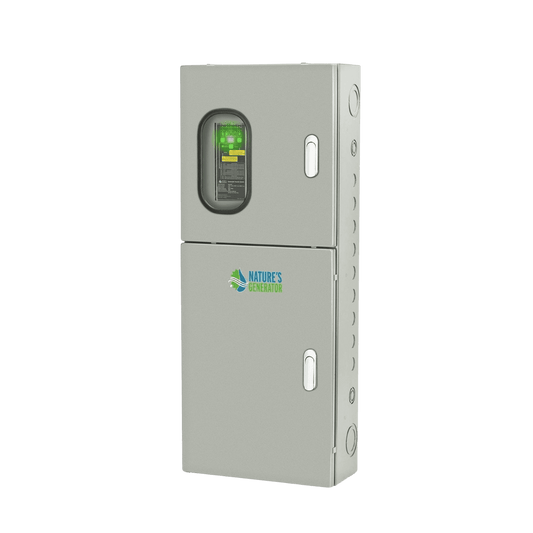
Always have a licensed electrician install a Transfer Switch. This device acts as a "traffic cop," safely disconnecting your home from the grid before allowing the generator to take over the load.
Which One Should You Buy?
-
Buy Single-Phase (Split-Phase) if you are a standard homeowner. It's cheaper, fits your wiring, and runs your appliances safely.
-
Buy Three-Phase only if your property specifically has a three-phase utility drop and you are running industrial-grade equipment or massive commercial HVAC systems.
Choosing the right phase gives you peace of mind. When the storm hits and the grid goes dark, you want a system that hums along perfectly, not one that leaves you smelling burnt insulation.


