


Can you charge an electric vehicle with a solar generator? The short answer is yes, as long as you have the right gear. Electric cars need clean, steady electricity, which makes having a reliable backup power system essential during unexpected outages. Whether you need a lightweight portable backup power unit for small battery top-ups or a heavy-duty solar power generator for long blackouts, charging off the grid is now a practical reality. A high-capacity whole home power generator provides the voltage and storage needed to keep your house running and add essential miles to your car.
In this guide, our team explains how emergency off-grid EV charging actually works. We will look at Level 1 and Level 2 charging speeds, how many driving miles you can expect during a blackout, what specs your equipment needs, and how setups like the Nature's Generator MyGrid 10K handle off-grid charging when the power grid fails.
Can a Solar Generator Really Charge an Electric Vehicle Off the Grid?
Yes, a solar generator can charge an electric vehicle off the grid, but it helps to set realistic expectations. There is a big difference between filling an EV battery completely from 0% to 100% and giving your car enough emergency juice to drive when you need it most.
Most electric car batteries hold between 60 kWh and 100 kWh of energy. Most standard portable solar power units hold 1 kWh to 10 kWh. Trying to fill an empty EV battery using a small backup battery is like trying to fill a swimming pool with a garden bucket.
However, during a severe storm or power blackout, you rarely need a 100% charge. You just need enough driving range to evacuate, grab emergency supplies, or drive to a working commercial charger. In our team's hands-on power testing, an average electric car gets about 3 to 4 miles of driving out of 1 kWh of electricity.
To charge an EV safely without blowing fuses or damaging electronics, your solar generator must meet three simple requirements:
-
Enough Continuous Watts: The generator's inverter must supply steady power that matches what your car charger pulls. If the car asks for more power than the generator can continuously push, the generator shuts down.
-
Clean Pure Sine Wave Power: Modern electric cars carry sensitive computers onboard. Standard cheap gas generators output rough, jumpy power (modified sine wave) that can trigger error codes in your car and stop it from charging. Solar generators deliver smooth, clean pure sine wave power just like your home wall outlet.
-
Proper Grounding: EV charging cables check for a safe ground connection before letting power flow. Your power source needs proper neutral-to-ground bonding, or your charging cable will flash red error lights.
Once these basics are covered, a solar generator acts like your own personal, silent gas station right in your garage.
How Does Level 1 vs Level 2 EV Emergency Charging Work with a Backup Power System?
Off-grid EV charging comes in two main styles: slow emergency trickle charging (Level 1) and fast charging (Level 2). Which one you use depends on the voltage and power output of your generator.
Level 1 Off-Grid Emergency Charging
Level 1 charging uses a standard 120-volt wall outlet. Every electric car comes with a portable charging cord that plugs right into a normal household socket. It pulls about 1.2 to 1.8 kilowatts of power and adds roughly 3 to 5 miles of range for every hour it stays plugged in.
While Level 1 charging is slow, it places very little stress on your backup battery. A mid-sized portable power unit can easily run a Level 1 charge overnight, adding 20 to 30 miles of range while you sleep without overheating or quickly draining your system.
Level 2 Off-Grid Emergency Charging
Level 2 charging steps up to 240 volts, which makes a massive difference in speed. Delivering anywhere from 3.8 to nearly 10 kilowatts of continuous power, Level 2 charging adds 15 to 30 miles of range per hour.
Most standard portable power stations cannot handle Level 2 charging because they only output 120V. To run Level 2, you need a high-output system equipped with a 240V outlet—specifically a NEMA 14-50 plug, which is the standard plug used for home EV chargers. Based on our experience testing emergency setups, having 240V power lets you add 40 to 60 miles of range in just two hours, giving you quick driving capability during a blackout.
What Technical Specs Are Required to Power an EV During an Outage?
If you are picking out equipment to back up your home and charge your EV, pay close attention to these four main specs so you do not end up with an underpowered system.
1. Inverter Output (Watts)
An EV charger is a continuous load. Unlike a refrigerator that turns on for fifteen minutes and turns off, an electric car pulls heavy power constantly for hours.
-
For Level 1 charging, you need an inverter rated for at least 2,000 watts of continuous power.
-
For Level 2 charging, you need an inverter that provides at least 5,000 to 10,000 watts of continuous power at 240 volts.
2. Battery Storage (Kilowatt-Hours)
Battery capacity determines how much energy you can store for later. A tiny 1 kWh power station will drain completely in under an hour if you plug in a car. For practical emergency use, look for a setup with at least 10 kWh (10,000 watt-hours) of capacity. Systems that let you stack extra batteries as your needs grow give you much better long-term flexibility.
3. Solar Panel Intake Speed
If the power grid stays down for days, you need solar panels to refill your backup battery. A generator that only accepts 400 watts of solar input will take days to recharge after powering your car. Look for systems that accept high solar input—ideally 4,000 watts or more. This allows for pass-through charging, where daytime sunlight powers your car directly while topping off your backup battery at the same time.
4. Battery Chemistry (LiFePO4)
Always look for Lithium Iron Phosphate (LiFePO4) batteries rather than older lithium-ion types. LiFePO4 batteries last for over 6,000 cycles (more than 10 years of daily use), handle high power loads without getting hot, and are significantly safer to keep inside your home or garage.
How Does the Nature's Generator MyGrid 10K Handle Emergency EV Charging in Real-World Scenarios?
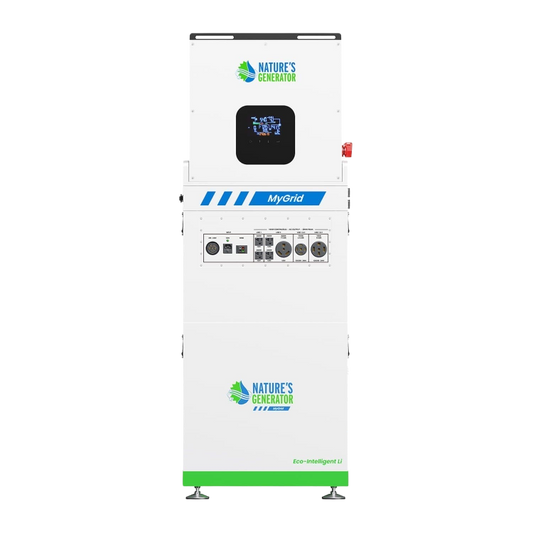
When comparing options for emergency home power and off-grid EV support, the Nature's Generator MyGrid 10K whole home generator is built specifically for heavy-duty jobs like Level 2 EV charging.
Built-in 240V Output with Native Outlets
The MyGrid 10K features a powerful 10,000-watt continuous pure sine wave inverter (with a 20,000-watt surge peak) that handles 120V and 240V split-phase power. It includes a built-in NEMA 14-50 outlet directly on the unit. You can plug your car's Level 2 mobile charger straight into the generator without buying special adapters or hiring an electrician for custom wiring hacks.
High Capacity and Fast Solar Recharging
Out of the box, the MyGrid 10K comes with a 10.5 kWh LiFePO4 battery. In a sudden emergency, that stored energy alone gives you roughly 30 to 35 miles of driving range. When you hook up solar panels—it supports up to 12,000 watts of solar array input—you turn your home into a self-sustaining power station that can run your fridge, lights, and EV off the grid indefinitely.
How Many Miles of EV Range Can You Expect from Daily Solar Recharging?
To figure out how far you can drive using off-grid solar power, you have to look at two situations: using stored battery power at night versus charging directly from solar panels during the day.
Let's break down the numbers using an average electric car efficiency of 3.3 miles per kWh.
Scenario 1: Nighttime Charging (Stored Battery Only)
When charging overnight without active sunlight:
-
Base Battery Capacity (10.5 kWh): Leaving 3 kWh to run your home lights and refrigerator leaves about 6.5 kWh for your car.
-
Added Driving Distance: 6.5 kWh × 3.3 miles/kWh = 21 to 25 miles of emergency driving range.
-
With 1 Extra Battery Module (21 kWh total): You get roughly 50 to 55 miles of range while still powering household basics.
Scenario 2: Daytime Solar Pass-Through Charging (Sunny Day)
When charging during the day while your solar panels collect sunlight:
-
4,000W Solar Panel Setup (5 Hours of Good Sun): Produces around 20 kWh of clean power in a single day.
-
Power Distribution: Using 10 kWh for household needs leaves 10 kWh of pure solar energy for your electric vehicle.
-
Added Driving Distance: 10 kWh × 3.3 miles/kWh = 33 to 38 miles of added daily driving range.
-
8,000W Solar Panel Setup: Generates around 40 kWh daily, giving you 70 to 100+ miles of added EV range every single day completely free from the grid.
3 Simple Tips for Off-Grid EV Charging
-
Lower Your Car's Charging Amps: Use your EV's touchscreen or smartphone app to drop the charging current (for example, lower it from 48A down to 16A or 24A). This stops your generator battery from draining too fast and matches the steady power coming in from your solar panels.
-
Charge Between 10 AM and 3 PM: Plugging in during peak daylight hours lets solar energy flow directly into your car battery without wearing down your backup battery bank.
-
Precondition While Plugged In: Cool down or heat up your car's cabin while it is still plugged into the solar generator so you don't waste internal vehicle battery power on climate control after you unplug.
What Is the Ideal Setup for Off-Grid EV Charging and Whole-Home Emergency Backup?
When picking out an emergency power plan, choose gear that handles both daily household essentials and vehicle charging. Exploring different Nature's Generator off-grid power solutions gives you simple ways to prepare your home for unexpected blackouts.
Portable Mobile Setup
If you rent your home or want an instant setup without installing permanent equipment, a standalone unit is best. You can keep your solar generator in your garage, run solar panels into your driveway, and plug your car directly into the generator's outlets whenever you need power.
Home Integration via Transfer Switch
For automatic backup, you can connect a high-output generator directly to your home's breaker panel using a manual or automatic transfer switch. When the main power fails, the switch transfers your home circuits—including your garage charger plug—over to your backup generator automatically.
Comparing Emergency Power Options
Choosing a system with heavy output and expandable storage gives you complete control over your home energy needs. Check out our full off-grid backup guide library for step-by-step advice on sizing solar panel setups and choosing emergency backup circuits.
Conclusion
Can you charge an electric vehicle with a solar generator? Absolutely. While fully charging an EV battery requires a clear energy plan, emergency Level 1 and Level 2 charging provides plenty of range to get you through power outages safely. By using clean pure sine wave power, 240V split-phase capacity, and reliable LiFePO4 battery storage, modern solar generators keep your car ready to drive and your home running smoothly when the grid goes down.
Having reliable equipment makes all the difference when extreme weather hits. The Nature's Generator MyGrid 10K delivers the 10,000-watt continuous output, native 240V plug, and high solar intake needed to power your home and charge your electric vehicle off the grid. With expandable battery capacity and zero fuel costs, Nature's Generator gives your family complete energy independence whenever you need it.


