


When the summer sun bears down, the instinct is to crank the central air conditioning to its lowest setting. However, for many homeowners, this results in astronomical utility bills and unnecessary strain on the electrical grid. Achieving a comfortable home environment shouldn't require compromising your financial or energy goals. By integrating a solar power generator or a whole home power generator into your setup, you can maintain a reliable backup power source that ensures your comfort never wavers.
In this deep dive, we explore the Zone Cooling Method—a strategic approach to climate control that optimizes efficiency without sacrificing relief. Our team at Nature's Generator has spent years analyzing how the Zone Cooling Method can be paired with sustainable energy to provide maximum comfort with minimal waste.
This guide will answer the most critical questions regarding localized climate control: what the method entails, the specific hardware required, how to calculate energy loads, and why shifting away from "whole-house" cooling is the smartest move for your wallet and the environment.
What Exactly is the Zone Cooling Method and How Does it Save Money?
The Zone Cooling Method is a strategy based on the simple logic that you do not need to refrigerate every square inch of your home simultaneously. In a traditional central AC setup, the system works to maintain a uniform temperature in every room, including guest bedrooms, hallways, and storage areas that may remain empty for 90% of the day. This "blanket" approach is inherently inefficient.
By contrast, zone cooling involves dividing your home into specific areas (or zones) and cooling only the space you are currently occupying. For example, during the day, your "zone" might be the home office and the kitchen. At night, the zone shifts exclusively to the bedrooms. Based on our experience, users who switch to this method can see a reduction in cooling-related energy consumption by as much as 30% to 50%.
The financial savings stem from two areas:
-
Reduced Compressor Load: Smaller, localized units (like window ACs or mini-splits) use significantly less wattage than a 5-ton central unit.
-
Decreased Run Time: When you aren't trying to move air through hundreds of feet of ductwork, the desired temperature is reached faster and maintained with less effort.
Central AC vs. Zone Cooling: Which System Offers the Best Return on Investment?
When deciding between sticking with central air or transitioning to a zoned approach, homeowners must look at the long-term Return on Investment (ROI). Central air systems are convenient but come with high maintenance costs and "duct loss"—energy that escapes through leaks in the ventilation system before it ever reaches your room.
Our team has found that the ROI of zone cooling is accelerated when paired with portable power solutions. If you are using a Nature’s Generator Gold System, you can effectively run a portable AC unit in a single room using solar energy alone. This effectively brings your cooling cost for that zone down to zero dollars after the initial equipment investment.
Comparison Table: Central AC vs. Zone Cooling
|
Feature |
Central Air Conditioning |
Zone Cooling Method |
|
Energy Consumption |
High (3,500W - 5,000W+) |
Low to Moderate (500W - 1,500W per zone) |
|
Installation Cost |
High ($5,000 - $12,000) |
Low to Moderate ($300 - $3,000) |
|
Precision |
Low (One thermostat for all) |
High (Individual control per room) |
|
Backup Potential |
Difficult (Requires massive generators) |
High (Easily powered by solar generators) |
By focusing on high-intent zones, you avoid the "drain" on your bank account and your power reserves.
How Much Power Does an AC Unit Require for Effective Zone Cooling?
Understanding the electrical requirements of your cooling units is the most vital step in planning a zone cooling strategy. Many users mistakenly believe that any "portable" generator can handle an air conditioner. In reality, AC units have two power ratings: running watts and starting watts (surge).
Based on our technical testing, a standard 5,000 BTU window air conditioner typically draws about 450–600 watts while running. However, the moment the compressor kicks on, it may require a surge of 1,200 watts or more. To successfully implement zone cooling with a solar power generator, you must ensure your inverter can handle that initial spike.
For larger rooms requiring a 10,000 or 12,000 BTU unit, the power draw increases. These units often run at 1,000–1,200 watts. This is where high-capacity systems like the Nature’s Generator Lithium 3600W become essential. This unit provides the necessary "headroom" to handle the compressor's surge, ensuring that your zone stays cool even if the main grid goes down.
Can a Whole Home Power Generator Support a Zone Cooling Strategy During an Outage?
A common question our support team receives is whether a backup system can handle the rigors of summer heatwaves during a blackout. The answer is a resounding yes, provided the strategy is focused on zones. Trying to power a 240V central AC unit during an outage requires an immense amount of stored energy and a high-voltage output.
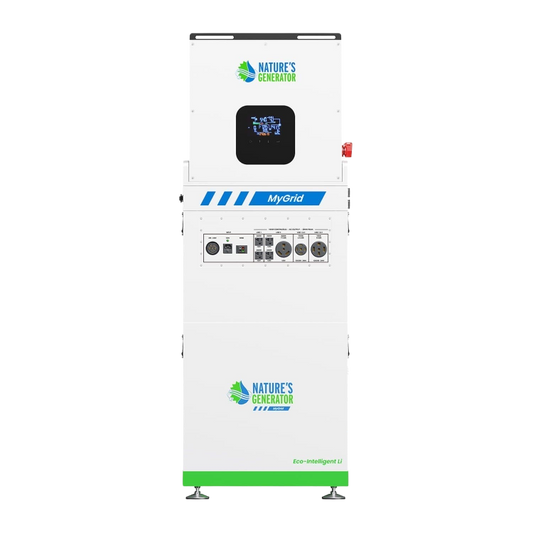
However, by utilizing a whole home power generator to support specific zones, you can maintain a high quality of life for days. In an outage scenario, we recommend identifying a "Safety Zone"—usually a primary bedroom or a living area. By plugging a high-efficiency portable AC into your Powerhouse V2, you can keep that specific room at a comfortable 72 degrees.
This modular approach to power allows you to prioritize:
-
Medical Needs: Keeping temperature-sensitive medications or equipment cool.
-
Sleep Quality: Ensuring at least one room is cool enough for restful sleep.
-
Food Preservation: Running your refrigerator and a localized AC simultaneously.
What Are the Best Practical Ways to Implement Zone Cooling in a Modern Home?
Transitioning to zone cooling doesn't require a total home renovation. Our team suggests a phased approach to implementation:
-
Identify Your High-Traffic Zones: Most families spend 80% of their time in 20% of their home. Map out where you are during the morning, afternoon, and evening.
-
Install Localized Equipment: This could be a high-efficiency window unit, a portable "hose-in-window" AC, or a ductless mini-split.
-
Seal the Zone: Zone cooling only works if the air stays in the room. Use door snakes and weather stripping to ensure your "cool zone" isn't leaking into the "uncooled" hallway.
-
Integrate Smart Controls: Use smart plugs or Wi-Fi-enabled AC units to schedule cooling. For example, have the bedroom zone start cooling 30 minutes before you go to bed, rather than running it all day.
-
Utilize Solar Offset: Place your solar panels in peak sun and use that direct energy to power your daytime zone (like a home office). This creates a "closed-loop" cooling system that costs nothing to operate.
What Do Real Users Say About Transitioning to Targeted Cooling?
Customer feedback highlights the practical benefits of this shift. We recently spoke with a customer in Arizona who faced rising electricity rates. By switching off their central air during the day and using a Nature’s Generator system to power a portable AC in their home office, they reported a $150 monthly reduction in their utility bill.
Another real-world scenario involves "van-lifers" and off-grid cabin owners. In these compact environments, the zone cooling method is the only viable option. One user shared that their Nature’s Generator Elite allowed them to run a small evaporative cooler throughout the night, making off-grid living in the high desert not just possible, but comfortable.
These scenarios prove that whether you are in a suburban home or a remote cabin, the principles of targeted cooling remain the same: focus the energy where the people are.
Is Zone Cooling the Right Choice for Your Household?
The decision to move toward the Zone Cooling Method depends on your home’s layout and your energy goals. If you live in a large, multi-story home with many unoccupied rooms, the benefits are immediate and substantial. If you live in a small studio apartment, your entire home is essentially one zone, so the focus should be on the efficiency of that single unit.
For those looking to achieve energy autonomy, zone cooling is the missing piece of the puzzle. It reduces your total "energy footprint," making it much easier to transition to a solar power generator for your daily needs. When you reduce the demand, the supply goes much further.
Why is the Zone Cooling Method the Most Intelligent Choice for Your Energy Future?
In summary, the Zone Cooling Method is not just a way to save money—it is a more intelligent way to live. By moving away from the "cool everything" mindset and focusing on high-intent zones, you can enjoy a chilled environment without the crushing weight of high energy bills.
Whether you are looking to lower your monthly expenses or searching for a reliable backup power solution for the next heatwave, Nature’s Generator provides the tools necessary to take control of your climate. By investing in a whole home power generator or a modular solar power generator, you ensure that your comfort is never at the mercy of an aging power grid.


