


You’ve got a solar inverter that can power your home, a 50A automatic transfer switch, and a plan for keeping essential circuits running when the grid goes down. Then the GFCI breaker trips. Again.
It’s tempting to blame the breaker, but that’s not always where the problem starts. Neutral wiring, grounding, the inverter’s internal controls, or the way the transfer switch handles incoming power could all be involved.
For homeowners looking for reliable backup power, comparing a solar power generator, planning a whole home power generator, or shopping for portable backup power, these details are worth getting right before installation.
At Nature’s Generator, we look at backup power as a complete system, not just a battery and an inverter. This guide covers what makes a 50A automatic transfer switch (ATS) compatible with a split-phase 240V solar inverter, why GFCI breakers may trip, what needs to be checked, and how to choose equipment that works together safely.
One important point up front: there isn't one universal wiring arrangement that fixes every GFCI problem. The correct setup depends on your equipment and electrical system. Have a licensed electrician handle the wiring and verify the final configuration.
Why Does a GFCI Breaker Trip When You Connect a Solar Inverter to an ATS?
A GFCI breaker watches the current flowing out through the monitored conductors and compares it with the current returning. When those amounts don't match, it trips. That difference can mean current is escaping through an unintended path, including one that could expose someone to an electric shock.
A few things can cause this in a solar backup setup.
Neutral-to-ground bonding may be wrong for the system. Neutral normally carries return current, while the equipment grounding conductor provides a path for fault current. An extra neutral-to-ground connection can let some current travel through the grounding system, which may trigger a GFCI.
The transfer switch may handle neutral differently than the inverter expects. Some transfer switches leave neutral connected between the two power sources. Others switch it along with the hot conductors. The right arrangement depends on the inverter's grounding design and how the electrical system is configured.
The inverter may change its grounding arrangement when its operating mode changes. Some models use an internal relay to connect or disconnect neutral and ground under certain conditions. A setup that behaves normally on utility power may act differently when the inverter takes over.
There could be an actual electrical fault. Damaged insulation, moisture, faulty appliances, or other wiring problems can also cause GFCI trips. Don't assume every trip is a compatibility issue.
That last point matters. A breaker that trips repeatedly is telling you something needs attention. Don't remove GFCI protection, disconnect grounding conductors, or add a bonding jumper just to keep the system running.
The electrician needs to identify the cause first. For more background, see Schneider Electric's guidance on grounding backup generators.
What Does Split-Phase 240V Mean for Your Backup Power Setup?
A split-phase inverter supplies two 120V legs, usually called L1 and L2. Each leg provides about 120V relative to neutral, while the voltage between the two legs is approximately 240V.
That lets a suitable inverter supply different kinds of household equipment. Refrigerators, lighting, internet equipment, and ordinary outlets typically use 120V. Some well pumps, workshop equipment, and other larger appliances use 240V.
Here's where homeowners can run into trouble: an inverter that produces enough total watts isn't necessarily capable of supplying the right voltage and current to every circuit in the house.
Before buying an inverter or pairing it with a transfer switch, check these specifications:
-
Output voltage: Does it supply genuine 120/240V split-phase power?
-
Continuous output: Can it handle the loads you expect to run at the same time?
-
Surge capacity: Can it accommodate the starting demand of motors and compressors?
-
Leg capacity: Does it support the current required on each 120V leg?
-
Neutral and grounding requirements: Does its installation manual explain how these connections must be handled?
-
Transfer switch compatibility: Does the manufacturer approve the intended arrangement?
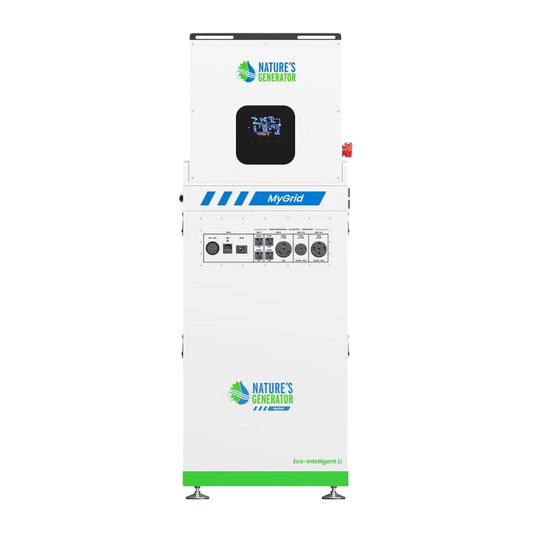
The Nature's Generator MyGrid 10K Gen 2 is one product worth examining when planning whole-home backup. Its published specifications list 120/240V split-phase output, 10,000W of continuous output, and 20,000W of peak output.
Those numbers provide a starting point, not a guarantee that every household circuit can run from it. The actual load, starting currents, inverter limits, and electrical configuration still matter.
Will Any 50A Automatic Transfer Switch Work With a 240V Solar Inverter?
No. The 50A rating is only one part of the picture.
At 240V, 50A corresponds to 12,000 volt-amperes of apparent power. A 10,000W continuous-output inverter has a lower nominal power ceiling, assuming a power factor of 1. That doesn't make the two products incompatible. It means the inverter, not the switch's maximum rating, determines how much power the backup source can supply.
Think of the transfer switch as the equipment that selects which source feeds the designated circuits. It doesn't create extra power or make an undersized inverter capable of carrying a larger load.
The Nature's Generator 50A Automatic Generator Transfer Switch is listed for 120V, 208V, and 240V applications. Its product information also describes support for GFCI- and AFCI-protected circuits.
That gives homeowners useful information to start with. Still, don't read a general compatibility statement as approval for every inverter, panel, and neutral arrangement.
Before settling on a switch, have the installer check its rated current, voltage, pole configuration, neutral switching, overcurrent protection, conductor requirements, and approved applications. The inverter's documentation needs to be reviewed alongside it.
The transfer equipment must also prevent an unsafe connection between utility power and the backup source. A poorly designed or installed arrangement can cause backfeeding, equipment damage, or serious injury.
Should the Transfer Switch Use a Switched Neutral or a Solid Neutral?
This is one of the first things an electrician should establish when investigating repeated GFCI trips.
A solid-neutral transfer switch keeps the normal and backup sources connected to a common neutral. A switched-neutral transfer switch changes the neutral connection along with the selected source.
Neither design is automatically right for every solar inverter. The answer depends on the source's neutral-to-ground bonding arrangement, the inverter's internal controls, and the way the electrical system is designed.
Some inverters use a grounding relay that changes state as the unit moves between operating modes. Victron Energy documents this type of behavior for certain inverter models in its VEConfigure manual. Other products may operate differently, so don't assume one manufacturer's instructions apply to another inverter.
Why does the neutral-to-ground connection matter?
Neutral and equipment ground have separate jobs. Neutral carries normal return current. The equipment grounding conductor provides a protective path when a fault energizes exposed conductive parts.
Where neutral and ground are connected, and whether that connection changes when the backup source takes over, must be determined from the equipment instructions and applicable electrical code.
An unintended extra bond can create a parallel path for return current. Some current may then flow outside the route monitored by the GFCI, causing it to trip.
But that's only one possibility. A real leakage fault can produce similar symptoms.
The fix isn't to remove every neutral-to-ground connection or add another one until the breaker stops tripping. Either move could leave the system unsafe. The electrician needs to establish the intended bonding arrangement for the exact inverter and transfer switch being installed.
What Should an Electrician Check Before Installing the 50A ATS?
A quick look at the product labels isn't enough. Before the equipment is connected and commissioned, the installer should review the entire backup system.
Start with the ratings. Check the inverter's voltage, frequency, continuous output, surge capacity, current limits, and grounding requirements. Compare those with the transfer switch, conductors, and circuit protection.
Then examine the neutral arrangement. The electrician needs to know whether neutral stays connected across the two sources, whether the switch changes it, and whether the inverter has an internal bonding relay.
Check the grounding and bonding. Equipment grounding must be continuous, and all bonding connections must match the system design and applicable code. Grounding conductors shouldn't be used as normal return-current paths.
Review the GFCI-protected circuits. Shared neutrals, incorrectly routed conductors, or wiring that bypasses part of a protective device's monitoring path can cause trouble. The installer should also consider the actual condition of the circuits and connected appliances.
Finally, check the manufacturer's instructions. Confirm that the intended combination of inverter, ATS, panel, and protection devices is permitted. If the manuals don't clearly address the proposed configuration, get technical guidance from the manufacturers before proceeding.
Nature's Generator provides 50A transfer switch support and installation information that can help installers locate the relevant product documentation.
This review is particularly important if you're adding backup power to an existing solar installation. An existing grid-connected inverter, battery system, and transfer switch may each have their own operating and isolation requirements.
How Can You Test the Backup System Without Ignoring a GFCI Trip?
The system should be tested by a qualified electrician after the wiring has been checked and approved for the intended setup.
Commissioning should establish that the equipment operates correctly on utility power, transfers to backup power as designed, and handles the return to the normal source according to the manufacturer's instructions. The electrician should verify the expected voltage relationships and confirm that the protective devices function properly.
The installer should also test the system with suitable loads, within the inverter's limits. Starting a refrigerator compressor or pump can demand more power than running the same equipment once it's already operating. An inverter may work well with lights and electronics but struggle when a motor starts.
GFCI devices should be tested according to their instructions, using appropriate testing methods. Protection must remain in place during the process.
If the breaker trips, stop and find out why before continuing. Repeatedly resetting it doesn't solve the problem. Neither does bypassing the device to see whether the system runs.
A setup that supplies power without an immediate trip isn't necessarily safe. Correct voltage, grounding, bonding, and protective-device operation all need to be verified.
What If the GFCI Still Trips After the Installation Is Checked?
Pay attention to when it happens. The timing can help the electrician narrow down the cause, although it can't identify the fault on its own.
|
When the breaker trips |
What needs to be investigated |
|
Only when backup power is active |
Inverter grounding behavior, neutral connections, output wiring, or leakage |
|
Right as the ATS changes sources |
Transfer operation, neutral switching, bonding, and source compatibility |
|
When one appliance starts |
Appliance leakage, motor-related faults, damaged cords, or circuit wiring |
|
After rain or damp weather |
Moisture intrusion, outdoor connections, or insulation damage |
|
When demand increases |
Inverter limits, wiring and connections, load interactions, or protective-device coordination |
Don't assume the breaker is defective just because it trips only in inverter mode. The inverter may change the electrical conditions in a way that exposes a wiring problem that wasn't obvious on utility power.
The reverse is also true: a grounding configuration isn't automatically at fault just because the trip occurs during a transfer. A damaged appliance or faulty cable could be responsible.
If you notice burning smells, unusual heat, damaged insulation, or signs of arcing, stop using the affected equipment and arrange an inspection. Don't keep testing it under load.
Replacing a breaker should come after proper testing shows that the breaker itself is faulty, not before.
Which Backup System Makes Sense for Your Home?
The best setup depends on what you actually need to keep running. It doesn't have to be the biggest one available.
A home that needs a refrigerator, lights, internet equipment, phone charging, and a few outlets has different requirements from a property with a well pump, workshop equipment, or multiple 240V appliances.
Start by listing the circuits you want backed up. Work out their running wattage, identify equipment with high starting demand, and consider which loads might run at the same time. The installer should account for the current available on each split-phase leg, too.
If you already have rooftop solar, ask how the backup system will interact with the existing inverter and any equipment designed to disconnect solar generation when the utility fails. Not every grid-connected solar system can continue producing power during an outage without a suitable backup arrangement.
For homeowners comparing options, the MyGrid 10K Gen 2 is a starting point for assessing a dedicated whole-home backup system against those needs. Its published output ratings should be compared with the household's actual demand, not just the combined wattage printed on appliance labels.
What can customer reviews tell you before you buy?
Customer feedback can help you understand how a system performs in everyday use, but read it in context. A testimonial about lower electricity bills, for example, doesn't establish that an inverter and transfer switch will work together without GFCI problems.
Nature's Generator's MyGrid product page includes a customer testimonial reporting an electricity-bill reduction of nearly 70%. Treat that as an individual's reported experience, not a result every household should expect. Solar production, utility rates, usage patterns, and system settings all affect savings.
For backup power, look for reviews that describe the actual setup: which circuits were powered, whether the home used 120V or 240V equipment, how the system performed during an outage, and whether installation required additional electrical work.
Those details are more useful than a general statement that a product works well. Reviews can help you narrow your choices, but the product manual and a proper compatibility assessment should decide whether a specific system suits your home.
How Do You Avoid GFCI Problems With a 50A ATS?
A 50A transfer switch and a split-phase 240V solar inverter can be part of a dependable home backup setup. But matching the voltage and amperage ratings is only the beginning. Neutral switching, grounding and bonding, GFCI circuit wiring, and the inverter's operating modes all need to line up.
Before buying, check the equipment specifications and have a qualified electrician review the proposed combination. If the GFCI trips, find the cause rather than changing connections at random or removing protection.
Nature's Generator offers home backup systems and transfer-switch resources to help homeowners and installers evaluate their options. Choose equipment based on your home's real power needs, verify that the components are compatible, and have the completed installation tested before relying on it during an outage.


